Tag: build your business Page 1 of 7

What Can ₦10,000 Really Do for Your Financial Future in Nigeria?

You might feel like ₦10,000 is too little to start investing. In today’s Nigeria, it doesn’t go far and can be gone after just a few market trips. Sometimes, you might spend it without even noticing where it went.

But there’s another way to see ₦10,000. It can start an investment habit, which is often more important than the amount itself. Many beginners wait until they have a lot of money before learning about investing, but you don’t need millions to build good financial habits. What matters is having a clear goal, choosing the right investment, and staying disciplined about adding more money over time.

So, if you have ₦10,000 right now, what can you do with it? Here’s a simple breakdown.

Is ₦10,000 Enough to Start Investing?

Yes, ₦10,000 is enough to get started. But don’t expect to turn it into ₦1,000,000 overnight. Hoping for quick gains can push you into risky situations or lead you to scams and unrealistic promises.

Instead, see your first ₦10,000 as seed money. Use it to learn how investing works and to build the habit of making your money work for you. The Nigerian Securities and Exchange Commission points to options like equities, fixed-income investments, mutual funds, exchange-traded funds, and real estate investment trusts. The best choice depends on your goals, how long you want to invest, and how much risk you’re comfortable with.

Before Investing Your ₦10,000, Ask Yourself One Question

What do I want this money to achieve?

This question matters more than picking an investment app. Before you invest, know why you’re setting the money aside. Maybe you want to build wealth over time, save for a business, avoid spending it on little things, learn about investing, build an emergency fund, or prepare for a big expense later.

Your answer will help you decide where to put the money. If you need the money next month, you’ll invest differently than someone saving for ten years. Always match your investment choice to your goal and how long you can leave the money invested.

Option 1: Start With a Money Market Fund

If you want a safer place to start, look into money market funds. These funds usually invest in short-term options, and the SEC says they focus on keeping your money safe, earning some income, and letting you access your cash easily. This differs from leaving your money in a regular account.

But remember, not all money market funds are the same. Before you invest, check what the fund aims to do, its fees, risks, minimum amount needed, and how you can withdraw your money. Also, make sure the provider is registered. The SEC has tools to help you check if an investment company is properly registered.

Option 2: Explore Fixed-Income Investments

Another option is fixed income. These investments include government or corporate bonds. Basically, you lend your money and get paid back with some interest, based on the terms of the investment.

The SEC says fixed-income investments usually have less risk than stocks, but the real risk depends on the specific investment. For beginners, the key is this: don’t invest just because someone calls it “safe.”

Make sure you know what you’re buying, who will pay you back, when you can get your money, and what could go wrong. Don’t let the word “safe” take the place of doing your own research.


Option 3: Invest Through a Diversified Fund

Employees Missing Deadlines? 5 Ways Managers Can Fix Poor Communication

Are your employees constantly missing deadlines? The problem may not be laziness. Poor communication and a lack of trust could be affecting your team’s performance.

A business can have talented employees and still struggle to get work done on time. Projects get delayed. Customers become frustrated. Managers spend more time following up. Employees blame one another, and the same problems keep happening.

One common reason is poor communication in the workplace.

This issue was a major assignment in one of my MBA classes: how do we fix communication issues as a manager?  The question was simple:

Imagine you are a manager, and your team is missing deadlines because employees are not communicating well with each other. What is the main problem, and what steps would you take to solve it?

At first, the obvious answer might be poor communication. However, poor communication can be a symptom of a deeper problem and in many teams, that deeper problem is a lack of trust.

Why Are Employees Missing Deadlines?

Missing a deadline does not always indicate that an employee is irresponsible. Often, an employee may lack the necessary information to complete the task, misunderstand another team member’s expectations, notice a problem but hesitate to report it, or assume someone else is handling part of the work. Therefore, managers should look beyond the missed deadline and ask the right questions to understand the underlying reasons.

The big question a manager should ask is this: Why did the communication fail?

Several factors can contribute to poor communication within a team, and in today’s article, I will help you identify 5 major causes of poor communication in the workplace and how to address each one. 


5 Major Causes of Poor Communication in the Workplace


1. Lack of Clarity

Employees need to understand what they are expected to do. Without clarity, communication is ineffective. Clarity is not what you think you said; it is rather what the person understands you to have said. That means you might need to be more specific about what you are trying to communicate, especially when you are working with a team that is not used to seeing your work. 

If a manager says, “Get this done quickly,” different employees may interpret “quickly” differently.

A good manager should clearly communicate:

  • What needs to be done
  • Who is responsible
  • When it should be completed
  • What standard is expected
  • What resources are available

Clear expectations reduce unnecessary confusion.

2. Poor Listening Skills

Communication is not only about speaking; it is also about listening. An employee may receive instructions but fail to understand them because they were distracted or did not ask questions. That is why every manager must be patient enough to troubleshoot conversations with their staff. Encourage them to give instant feedback on what they heard you say. 

A simple question such as “Can you repeat what you understand the task to be?” can prevent major mistakes.


3. Lack of confidence.

This is where the situation worsens. Employees who do not trust their management or coworkers may be more reluctant to speak out or share information. For example, an employee may see that a project will miss its deadline.

Instead of informing the management, the employee may remain silent because they are terrified of being chastised.

By the time the manager finds out, it may be too late to solve the situation. Trust allows workers to say things like:

“I have difficulty with this work. “I need help.” This type of talk may rescue a project. 

4. Inappropriate Communication Channels

Not every message should be communicated through the same channel.

Some businesses depend heavily on WhatsApp groups. Others use email, Slack, Microsoft Teams, project-management software, or face-to-face meetings.

The problem is not necessarily the platform. What matters is that businesses establish clear communication channels for different types of information.

For example:

  • Urgent issues → phone call or direct message
  • Formal instructions → email or documented platform
  • Team updates → team communication channel
  • Complex issues → meeting or video call

Also, I see some businesses with a mandatory rule that staff must communicate only through certain platforms. While this is necessary in many sensitive departments, for most day-to-day work, managers should encourage direct communication to reduce the bureaucratic feel. 

5. Different Communication Styles

Individuals communicate differently. One employee may prefer direct teaching. Another may require further explanation. Some staff talk openly in meetings, while others prefer to share their views discreetly.

Managers must comprehend these distinctions. Good leadership doesn’t require everyone to communicate the same way. It means creating a setting where everyone can communicate successfully.

How to Build a Startup in 2026: 6 Lessons Every Founder Should Know


The Real Problem May Be Trust

How to Multiply Your Money Starting with only $1,000.

If you think you need tens of thousands of dollars before you can start investing seriously, you are making a big mistake. The truth is that many successful investors built their wealth one small investment at a time, with as little as 1,000 dollars. If you’ve managed to save your first $1,000, you’re already ahead of millions of people who are still living paycheck to paycheck. 

The question now is not whether you should invest your money, but how to invest it wisely.

Shalom

In 2026, investors will have more opportunities than ever before. From stock market index funds and dividend-paying companies to real estate investments and online businesses, a thousand dollars can be the beginning of a powerful wealth-building journey.

This guide will show you the best ways to invest $1,000, the risks involved, and how beginners can create a simple investment strategy that works.

Why $1,000 Is a Great Investment Starting Point

A thousand dollars may not seem life-changing, but it represents something more important than the money itself: financial momentum.

When you invest your first $1,000, you begin developing habits that can help you build wealth for decades. That habit is the key to success, and one way it helps you flourish is by making you feel like an achiever and propelling you to do more. Also, when you begin to invest, you begin to understand a number of success principles as you learn:

  • How investing works
  • How to manage risk
  • How markets behave
  • How compound growth builds wealth over time

The goal of this investment is not to double your money overnight. The goal is to create a system that allows your investments to grow consistently year after year. Are there investments that can probably double your income in a day? Yes, however, it’s too risky to build a long-term wealth system, so in today’s investment lesson, we are looking at the steadily growing investment structure. 

Before You Invest: Build a Financial Foundation

Before investing your $1,000, make sure you have an emergency fund so that you don’t have to sell off your investment abruptly when unexpected needs arise. Car repairs, medical bills, job loss, and home repairs can force you to sell investments at the wrong time. In practical terms, aim to keep at least 3 to 6 months of living expenses in an emergency fund.

Another helpful thing to do might be to get high-Interest debt under control; If you’re paying 20% interest on credit card debt, paying it down may provide a better return than investing. Reducing expensive debt can be one of the smartest financial decisions you can make.

To set a clear financial vision, you can ask yourself:

  • Are you investing for retirement?
  • Building passive income?
  • Saving for a home?
  • Creating long-term wealth?

Your goals should influence your investment choices.

Best Ways to Invest $1,000 in 2026

1. Invest 1000 dollars in a Friends Business

You must have heard people say things like, “Someone invested in Uber in its early days and is now a millionaire.” If you invested $1,000 in Uber in its first round, your investment would be worth about $5 million at its peak.

Many people don’t appreciate the power of strategic friendships and connections in their lives. If you have a friend or family member who is ambitious and has integrity, there is nothing wrong with structuring a legally binding deal.

The only caveat is to do something that is structured so that you don’t have to get into issues that affect the relationship you share later in the future. The advantage of investing in friends and family is that you often get to be a part of what they are doing, and this also allows you to get a premium at a more affordable price than you would normally get.

2. Invest 1000 dollars in an S&P 500 Index Fund

For many beginners, this is one of the simplest and most effective options. An S&P 500 index fund gives you ownership in hundreds of America’s largest companies through a single investment.

Benefits include:

  • Instant diversification
  • Low fees
  • Strong long-term performance
  • Minimal maintenance

The S&P 500 has shown strong long-term growth and is one of the most popular indices for tracking the stock market. Over the past 100 years (as of February 2026), it averaged a 10.424% annual return with dividends reinvested. After adjusting for inflation, the return was 7.268%, indicating that much of the growth kept pace with rising prices. 

In shorter time frames, the results were also solid: the last 50 years saw an average annual return of 11.71% (7.84% after inflation), the last 30 years returned 10.121% per year (7.431% after inflation), and the last 20 years averaged 11.844% (8.146% after inflation). The past 10 years were especially strong, with an average annual return of 15.62%, or 12.022% after inflation. Dividends made up about 30% of total returns during these periods.

Looking at the S&P 500’s history, long-term investors who stayed patient and reinvested their earnings have usually done well. Even though annual returns can fluctuate due to economic conditions, inflation, or market events, the overall trend shows that sticking with it over time has helped people build wealth and beat inflation.

Millions Search YouTube, Amazon, Facebook, Google & ChatGPT: What It Means for Creators.

Each day, millions of people go to Google and type in just one word: YouTube, Amazon, Facebook, Gmail, Wordle, or ChatGPT. These searches are not questions or random. They are done on purpose.

In this blog post, I’ll explain what navigational searches are, why these platforms get so many searches, and what this shows about how people use the internet now. If you’re a writer, creator, entrepreneur, or digital leader, knowing this can help you put your content where people are already looking.

What Does “Navigational Search” Mean?

A navigational search is when someone already knows where they want to go and uses a search engine to reach that site more quickly.

Examples:

  • For example, typing ‘YouTube’ to go to youtube.com.
  • Or typing ‘Amazon’ when you want to shop online.
  • Or typing ‘Gmail’ to check your email.

The goal here isn’t to learn anything new, but simply to access a specific site.

Why Navigational Searches Matter

Navigational searches reveal the following trends:

  • Platforms are becoming dominant in their fields.
  • People are placing more trust in certain brands.
  • Users are forming habits around these platforms.
  • There is a growing dependency on digital ecosystems.

When millions of people keep searching for the same platform by name, it shows that the platform is now seen as a utility rather than just a regular website.

Let’s get to see the platforms with Crazy Numbers

1. YouTube: 185 Million Navigational Searches in Jan 2026 

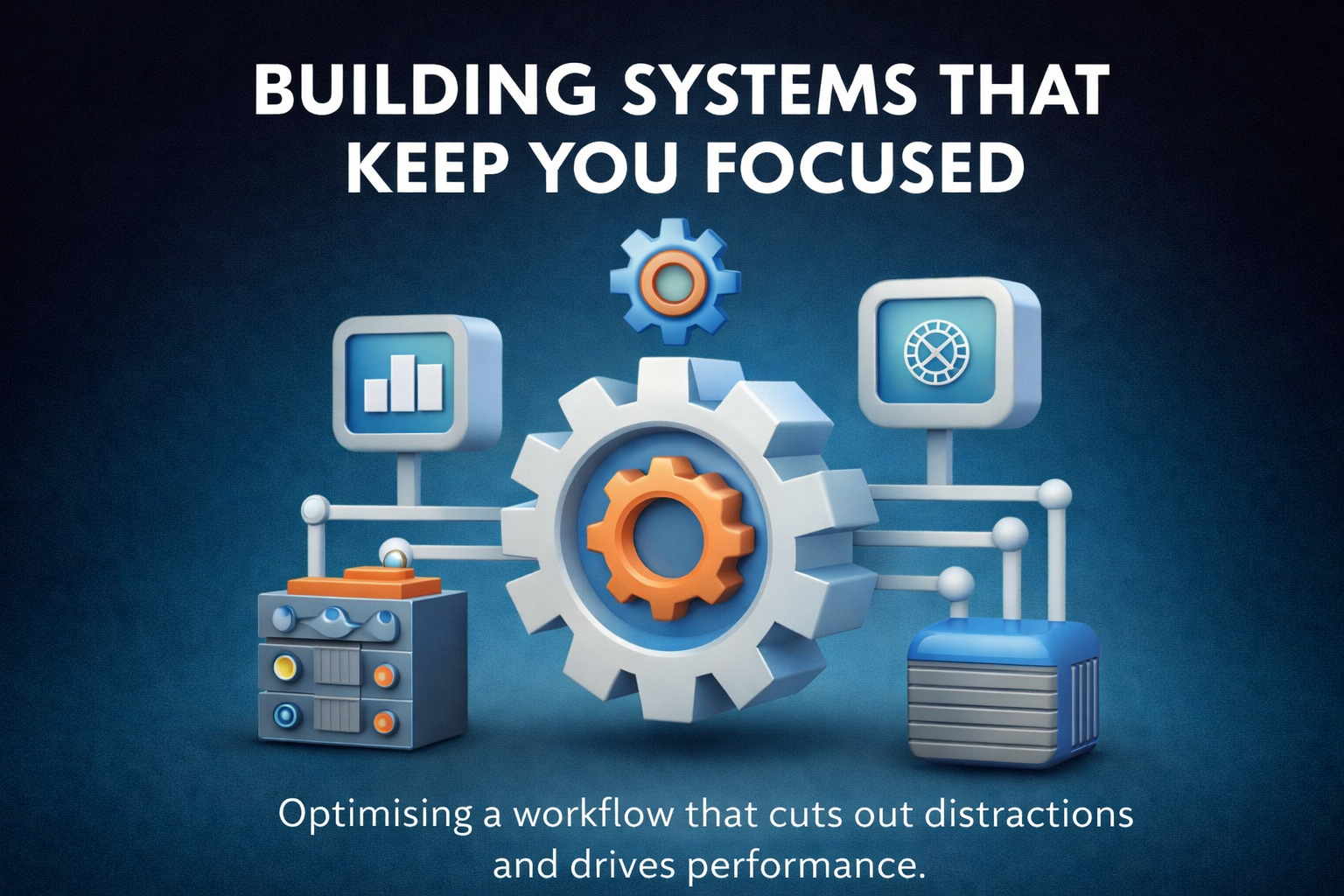
Focus Is the New Currency in 2026: Building Systems That Protect Your Focus Daily

If you have been following this series since the first part; I can almost be certain that you are already set for the year 2026 or for the remaining part of the year. In this part, we will consider the habit of building Systems that Protect Focus Daily. So, let’s recap;

In Part 1:   I established that focus is no longer optional in 2026.
In Part 2:   I dived deeper into why effort without results is a dangerous illusion.
In Part 3:  I explained the hard part of decision making: what to optimize, what to let go of, and when persistence becomes a liability.

In this final section, I’ll address the most essential issue of all: how can you maintain focus on a daily basis so that progress becomes normal rather than exhausting? Clarity without processes fades, and concentrate without structure finally collapses.

How to Win by Doing Less: Power of Focus in 2026

How to Track Result Producing Tasks in 2026: The Power of Focus

Why Focus Must Be System-Protected

Willpower is fickle, and motivation changes. When life interrupts and your attention is heavily influenced by how you feel each day, your objectives will never be realised. In 2026, those with the greatest systems will be more effective than those with the strongest discipline. Systems alleviate decision fatigue, conserve energy, and make consistency automatic. 

What, then, is a system? It is a choice or a sequence of decisions that, once taken, do not need to be made again.

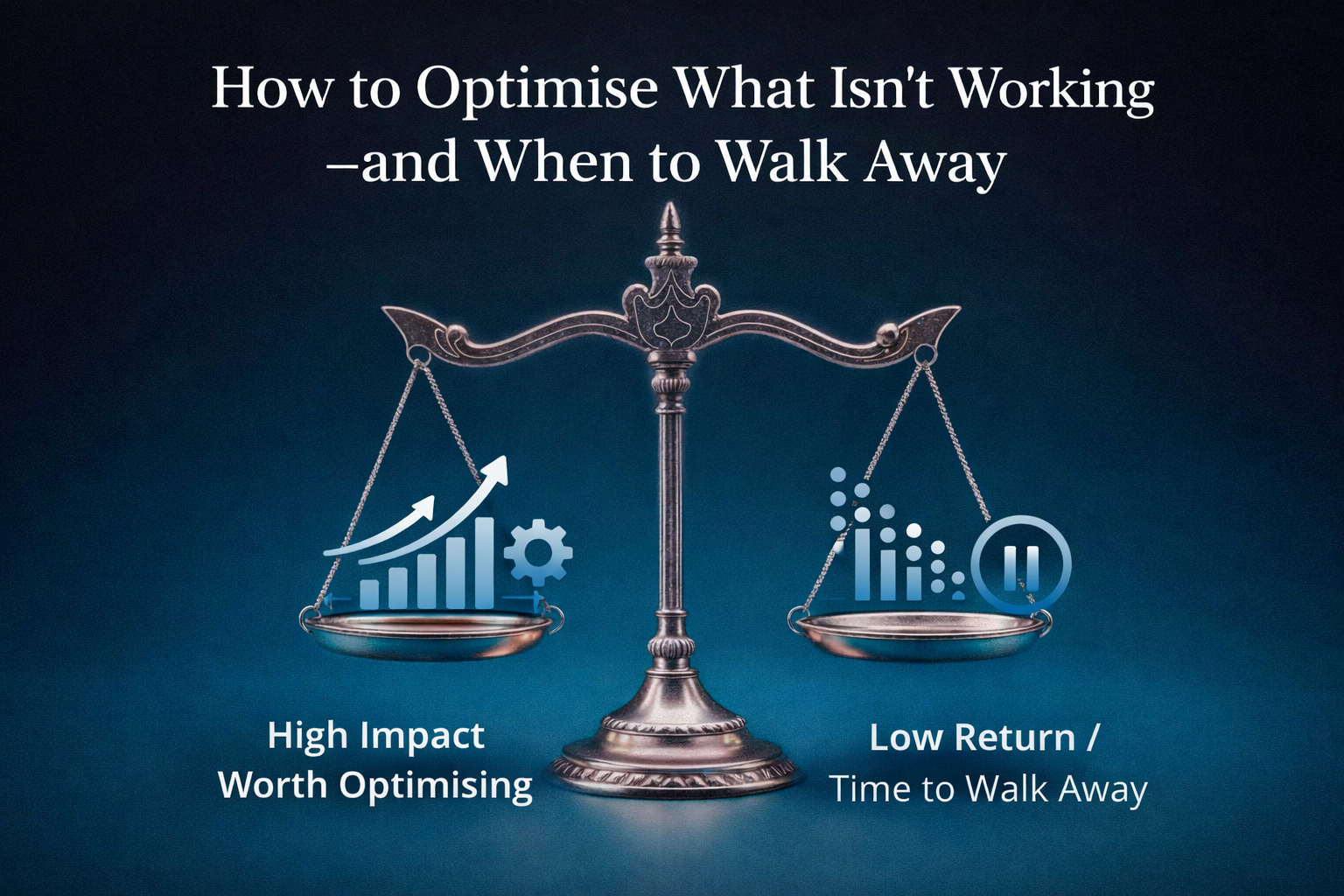
Focus Is the New Currency in 2026: How to Optimise What isn’t Working and When to Walk Away

How to Optimise What isn't Working and When to Walk Away

Not everything that isn’t working deserves to be abandoned. And not everything that appears to be providing results should be preserved. One of the most difficult focal selections in 2026 will be determining what needs to be optimised and what needs to be eliminated. Many people either quit too soon or stay too long, both of which stifle advancement. Why? Because focus is more than just persistence; it is also about judgment.

In Part 1 of this series, we established a hard truth: in 2026, focus is no longer optional. With rising noise, shrinking attention spans, and endless opportunities, only those who learn to prioritise what truly matters will experience meaningful progress.

Focus Is the New Currency in 2026: How to Win by Doing Less but Better

In Part 2, we went a step further. We confronted one of the most dangerous illusions of productivity—effort without results. We saw why tracking outcomes rather than busyness is the new standard and why focus must always be measured by results, not merely by exhaustive labour. 

Focus is the New Currency in 2026: Tracking results instead of effort. 

What to do with the things that aren’t working

Focus is the New Currency in 2026: Tracking results instead of effort. 

In Part 1, we went through FOCUS as an essential success key in 2026 and how the Eisenhower Principle might help us distinguish between significance and urgency. But it’s only half the job to know what to concentrate on. The true change occurs when we begin assessing result producing tasks rather than how busy we are.

Many individuals are worn out by working a lot yet accomplishing very little in a society where effort is evident, but effect is not always clear. For this reason, tracking results is the genuine measure of focus, which is the new currency. 

In this second part of the series, we will examine why the mind shift that will determine your success in 2026 is to focus on Result generating efforts rather than general effort.

How to Win by Doing Less: Power of Focus in 2026

The Mindshift that must happen. 

Effort is good, but the result is great. That is the phrase that will keep you working in 2026; avoid the trap of ineffective attempts. Many people have grown accustomed to futile attempts to defend their failure to attain their objectives. By discussing their efforts, they make it impossible for them to assess the situation objectively. Every entrepreneur, leader, or individual seeking extreme success must adopt this mindset.

“Effort is good, but the result is great”

Why Effort Is a Poor Metric in 2026

Effort feels wonderful because it’s obvious. You can see yourself working. Others can observe you working. It creates the illusion of momentum. However, hard work alone does not always lead to results.

In 2026, technologies like AI, automation, and other digital leverage will enable ten minutes of focused action to outperform ten hours of fragmented labour. People who understand leverage consistently surpass those who merely understand hard labour. This is why simply assessing effort is problematic. It rewards motion rather than direction. It keeps you occupied without making you productive.

The actual question is no longer, “How hard did I work?”

The question is: “What changed because I worked?”

Results are honest. They reveal what works and doesn’t. They remove emotional attachment to activities and force you to confront reality. When you track results, you start to notice patterns: Which behaviours cause growth?

Results also help you to see which habits contribute to momentum, and which tasks consume time without providing value. Clear feedback improves focus. Instead of guessing, you begin making informed selections. You stop romanticising the effort and start pursuing outcomes. This move alone has the potential to transform productivity, income, creativity, and peace of mind.

Stop Guessing: Top Financial Ratios Formulas for Entrepreneurs in 2026

What are Financial Ratios?

Financial ratios formulas for entrepreneurs are numbers that tell you the truth about your business’s financial health. They are mathematical comparisons that show how healthy your company really is over a specific period. Instead of guessing, these ratios help you see whether your business is growing, struggling, or just stagnant.

They also allow you to measure your performance against competitors in your industry. With the proper ratios, you can tell if you’re ahead, behind, or right on track. In simple terms, financial ratios help you understand your business’s strengths, weaknesses, efficiency, and overall financial position at a glance.

Why should you know Financial Ratios/Formulas?

Because I watch a lot of business shows and investor pitches, one thing has become very clear: when you sit in front of an investor asking for funding, there are a few things they immediately want to understand:

  1. What your business or idea is about
  2. Who you are as a founder or team
  3. What your numbers are saying

And of all three, I’ve noticed something interesting: investors will argue with you about your idea, they may even question your personality, but the moment you start talking numbers, the entire conversation changes.

In fact, the only reason an investor would walk away from a business with significant numbers is a lack of integrity on the part of the entrepreneur. But with substantial numbers, even a “not-so-brilliant” business idea can get praise and, many times, even funding.

The Foundation of Financial Leverage: How Borrowing Builds Wealth

Part 1: How Borrowing Can Build Wealth

What Is Financial Leverage?

Financial leverage is taking advantage of borrowed funds to grow wealth or expand a business. In simple terms, it means using other people’s money to do more than you could with your own.

When a company or an individual borrows money to buy an asset or invest in a project, they are using leverage. The goal is to make more profit from that investment than the cost of borrowing.

For example, a business that borrows $1 million at 8% interest and uses the funds to build a new product line expects the profit from that expansion to exceed $80,000 in interest costs. If that happens, leverage worked.

Why Leverage Matters in Business

Without leverage, most businesses would grow slowly. Borrowing allows entrepreneurs to access bigger opportunities without waiting years to save the full amount.

Leverage can:

  • Help businesses expand operations faster.
  • Allow individuals to invest in income-producing assets.
  • Multiply returns when the investment performs well.
  • Increase a company’s total value through smart debt use.

However, leverage is a double-edged sword. It increases both profits and losses. When things go wrong, the same loan that made growth possible can become a heavy burden.

How Financial Leverage Works

Emergency Funds: Simple Tips to Build One

Someone said, “The moment I begin to save for rainy days, it starts to rain the next day”. This is a hilarious way to describe the situation that many of us find ourselves in. We plan to save money for the future, only to discover that it’s almost impossible. We have spent more than we can afford and would need to dip into the other account to pay. Some would even borrow against the maturity of our savings account. Hence, it ends up as though we have not saved anything at all. 

The primary reason for this is that most people save up without a strategy. An excellent saving strategy takes your savings and apportions it into very strategic portfolios. An emergency portfolio is something you should aim to have as soon as you begin to experience financial stability. 

For most readers, an emergency fund portfolio is like preparing for a bad day. It conveys the impression that they are wishing themselves bad luck. The opposite is the case. An emergency fund account is not to be seen as a pot of bad luck waiting to manifest. It should rather be seen as a haven for financial inconsistencies or required expenses that were not planned for. In fact, it could be a portfolio that helps you harness opportunities in the future. 

What is An Emergency Fund?

An emergency fund, in simple words, is money set aside to cover unexpected expenses during periods of personal financial distress. Situations such as job loss, illness, a recession, or sudden medical bills are examples of when an emergency fund can become essential.

The primary purpose of this fund is to provide a financial safety net during unforeseen circumstances, helping you meet urgent expenses without resorting to high-interest debt or dipping into your strategic savings. By doing so, you reduce financial stress and keep your long-term plans intact.

Page 1 of 7

Theme by Anders Norén & Customized by Karol K