Most creators don’t fail because they lack talent; they don’t fail because they don’t have the latest gadgets to produce with. They fail because they spread themselves too thin. Trying to do many things at the same time. One week, they are making business content. Next week, they are posting comedy. Then motivation, finance, worship, lifestyle, and five other ideas at once. In today’s blog, I will show you a straightforward way to build unstoppable momentum as a content creator.
Momentum is difficult to build when your energy is divided. If you want to grow as a content creator, there are four principles that matter more than fancy cameras, expensive courses, or secret algorithms. These four secrets I am about to share with you are just the recipe that have been proven by global creators, and they can change your life in a moment.
1. Pick a Niche, but Don’t Pick What You Merely Like
A common mistake creators make is choosing a niche based solely on passion. Content should solve problems for your audience, even when you are not present. While passion is important, expertise significantly enhances its impact.
The best niche usually sits at the intersection of three things:
What you can talk about for years
What experience, training, or certification do you have
What produces value for other people
You do not need a PhD to teach online. However, if you have spent years studying, practising, working, serving, building, researching, or creating in a field, this experience gives you a significant advantage. Your experience reduces the learning curve for your audience.
As a creator and entrepreneur, Gary Vaynerchuk often emphasises:
“Document, don’t create.”
Meaning: start from what you already know.
Your niche should not feel like acting. It should feel like speaking from accumulated understanding. That is why you must choose a niche where your expertise is recognised and respected, and where you feel free to express yourself.
If you think you need tens of thousands of dollars before you can start investing seriously, you are making a big mistake. The truth is that many successful investors built their wealth one small investment at a time, with as little as 1,000 dollars. If you’ve managed to save your first $1,000, you’re already ahead of millions of people who are still living paycheck to paycheck.
The question now is not whether you should invest your money, but how to invest it wisely.
Shalom
In 2026, investors will have more opportunities than ever before. From stock market index funds and dividend-paying companies to real estate investments and online businesses, a thousand dollars can be the beginning of a powerful wealth-building journey.
This guide will show you the best ways to invest $1,000, the risks involved, and how beginners can create a simple investment strategy that works.
Why $1,000 Is a Great Investment Starting Point
A thousand dollars may not seem life-changing, but it represents something more important than the money itself: financial momentum.
When you invest your first $1,000, you begin developing habits that can help you build wealth for decades. That habit is the key to success, and one way it helps you flourish is by making you feel like an achiever and propelling you to do more. Also, when you begin to invest, you begin to understand a number of success principles as you learn:
How investing works
How to manage risk
How markets behave
How compound growth builds wealth over time
The goal of this investment is not to double your money overnight. The goal is to create a system that allows your investments to grow consistently year after year. Are there investments that can probably double your income in a day? Yes, however, it’s too risky to build a long-term wealth system, so in today’s investment lesson, we are looking at the steadily growing investment structure.
Before You Invest: Build a Financial Foundation
Before investing your $1,000, make sure you have an emergency fund so that you don’t have to sell off your investment abruptly when unexpected needs arise. Car repairs, medical bills, job loss, and home repairs can force you to sell investments at the wrong time. In practical terms, aim to keep at least 3 to 6 months of living expenses in an emergency fund.
Another helpful thing to do might be to get high-Interest debt under control; If you’re paying 20% interest on credit card debt, paying it down may provide a better return than investing. Reducing expensive debt can be one of the smartest financial decisions you can make.
To set a clear financial vision, you can ask yourself:
Are you investing for retirement?
Building passive income?
Saving for a home?
Creating long-term wealth?
Your goals should influence your investment choices.
Best Ways to Invest $1,000 in 2026
1. Invest 1000 dollars in a Friends Business
You must have heard people say things like, “Someone invested in Uber in its early days and is now a millionaire.” If you invested $1,000 in Uber in its first round, your investment would be worth about $5 million at its peak.
Many people don’t appreciate the power of strategic friendships and connections in their lives. If you have a friend or family member who is ambitious and has integrity, there is nothing wrong with structuring a legally binding deal.
The only caveat is to do something that is structured so that you don’t have to get into issues that affect the relationship you share later in the future. The advantage of investing in friends and family is that you often get to be a part of what they are doing, and this also allows you to get a premium at a more affordable price than you would normally get.
2. Invest 1000 dollars in an S&P 500 Index Fund
For many beginners, this is one of the simplest and most effective options. An S&P 500 index fund gives you ownership in hundreds of America’s largest companies through a single investment.
Benefits include:
Instant diversification
Low fees
Strong long-term performance
Minimal maintenance
The S&P 500 has shown strong long-term growth and is one of the most popular indices for tracking the stock market. Over the past 100 years (as of February 2026), it averaged a 10.424% annual return with dividends reinvested. After adjusting for inflation, the return was 7.268%, indicating that much of the growth kept pace with rising prices.
In shorter time frames, the results were also solid: the last 50 years saw an average annual return of 11.71% (7.84% after inflation), the last 30 years returned 10.121% per year (7.431% after inflation), and the last 20 years averaged 11.844% (8.146% after inflation). The past 10 years were especially strong, with an average annual return of 15.62%, or 12.022% after inflation. Dividends made up about 30% of total returns during these periods.
Looking at the S&P 500’s history, long-term investors who stayed patient and reinvested their earnings have usually done well. Even though annual returns can fluctuate due to economic conditions, inflation, or market events, the overall trend shows that sticking with it over time has helped people build wealth and beat inflation.
A lot of people think they need thousands of dollars to begin investing. In reality, many of the world’s most successful investors began with small amounts, such as $100. They built their wealth by making investing a regular habit, even before they had much money.
Today in America, $100 might not feel like a lot. It could pay for groceries, a streaming service, or a tank of gas. But if you invest that $100 wisely and keep at it, it can help you build long-term financial growth.
Inflation is a big challenge for Americans right now. Prices for housing, healthcare, groceries, and transportation keep rising each year. Even though a savings account feels safe, inflation slowly erodes the value of your money.
Because of this, many people are asking an important question:
How do I stop simply saving money and start growing it?
Sadly, many new investors have had bad experiences. Some bought into investments that were all hype and then lost money. Others followed social media trends without knowing the risks. Some just left their money sitting and watched inflation slowly erode its value.
The good news is that investing isn’t gambling if you have knowledge and discipline. With a smart plan, $100 can be the first step toward building wealth, earning passive income, and reaching long-term financial security.r some of the best investments you can start with $100 in 2026, including their risks, potential rewards, and beginner-friendly platforms to help you get started.
Why Keeping Your Money in a Savings Account May Not Be Enough
Many Americans still keep most of their money in regular savings accounts. These accounts are good for emergencies and short-term needs, but they aren’t meant to help you build real wealth.
For example, if your savings account pays 1% interest each year but inflation is 3%, your money is actually losing value, even if the balance goes up a little.
For example, if you leave $100 in your account for a few years, it might buy less in the future than it does now. That’s why many financial experts suggest investing some of your money instead of keeping it in savings accounts. Letting money work for you instead of sitting idle, your capital can generate returns through interest, dividends, business growth, or appreciation.
But before you invest, it’s important to know why some people lose money in the market.
In our previous blog post, we wrote on one of the most talked-about numbers in entrepreneurship, “WhatIsRevenueinBusiness?” We said that Revenue tells us how much money a business generates from selling its products or services, and for many founders, it’s often the first sign that customers, investors, and even you, as a business owner, are paying attention. But revenue only tells part of the story. Hence, today we are focusing on Profit in business and everything about it.
In fact, one of the biggest mistakes entrepreneurs make is assuming that high revenue automatically means a successful business.
I remember watching an episode of Shark Tank where an entrepreneur proudly announced that his company had generated hundreds of thousands of dollars in sales. The Sharks seemed impressed at first, but within seconds, the conversation shifted.
“What’s your profit margin?” “How much are you actually making?” “How much does it cost you to acquire a customer?” Suddenly, the room became quiet.
The startup’s founders, who were pitching, knew their revenue numbers perfectly, but it was a bit of a struggle to pin down exact figures for what the business was actually keeping after expenses.
And that’s an important lesson. In business, revenue might grab attention, but profit is what determines whether a business survives.
A company can generate millions in sales and still struggle financially. It can have customers, media attention, growing demand, and impressive revenue figures while quietly losing money every month.
History is filled with businesses that looked successful on the surface but eventually collapsed because they failed to turn revenue into profit.
That’s why understanding what profit in business is may be one of the most valuable financial lessons any entrepreneur can learn.
Because at the end of the day, businesses don’t survive on sales alone.
They survive on profit.
So, What Is Profit?
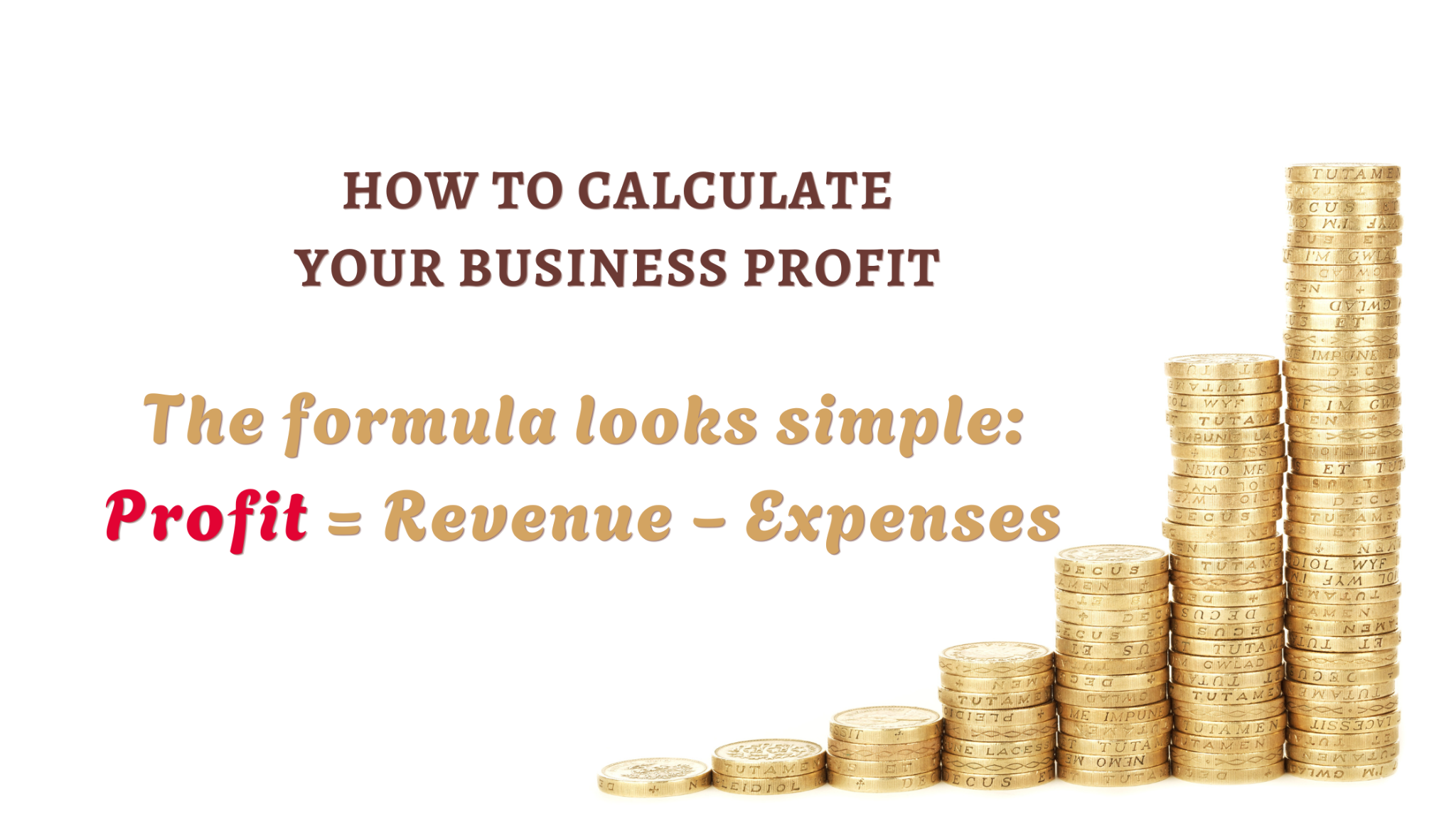
Simply put, profit is the money left after all business expenses have been deducted from revenue.
The formula looks simple: Profit = Revenue − Expenses
But despite how simple that formula appears, many entrepreneurs misunderstand what it means in practice.
Let’s imagine your business generates $20,000 in sales this month.
At first glance, you might feel like you’ve made $20,000. After all, that’s the amount that came into the business.
But then reality kicks in.
You paid suppliers.
You paid employees.
You spent money on marketing.
You paid for software subscriptions.
You covered transportation and operational expenses.
By the time everything is deducted, your numbers may look very different.
For example:
Inventory: $8,000
Salaries: $2,000
Marketing: $1,000
Transportation: $1,500
Software subscriptions: $500
Utilities and operations: $1,000
Total Expenses: $14,000
Actual Profit: $6,000
The business generated $20,000 in revenue but kept only $6,000.
And that difference is exactly why profit matters. Revenue tells you what came in, and Profit tells you what stayed.
In many ways, profit is the business world’s version of a report card. It reveals whether the business is truly creating value or simply moving money around.
This is one reason investors, accountants, lenders, and experienced entrepreneurs pay so much attention to profitability. Revenue may indicate that a company is attracting customers, but profit indicates whether the business model actually works.
As investor Warren Buffett has often demonstrated through his investments, great businesses are not necessarily the ones generating the most revenue. They are often the ones that consistently turn revenue into profit year after year.
The good news is that profit is not just a number you calculate. It’s also a skill you can improve.
Here are three profit-management skills every entrepreneur should learn.
1. Learn How to Control Costs Without Hurting Value
One of the fastest ways to improve your business’s profits is to learn how to manage costs wisely.
Notice I didn’t say “cut every expense.” Because many entrepreneurs hear the phrase “reduce costs” and immediately start removing things their business actually needs. They stop marketing, delay maintenance, reduce product quality, or underinvest in their team.
That often creates bigger problems later.
Instead, smart entrepreneurs focus on controlling unnecessary costs while protecting the things that create value for customers.
In his book Profit First, Mike Michalowicz explains that many businesses don’t have a sales problem; they have an expense problem. Money comes into the business, but poor spending habits prevent owners from seeing meaningful profits.
A simple question every entrepreneur should regularly ask is, “If I removed this expense tomorrow, would my customer notice?” If the answer is no, it may be worth reviewing.
One of the first financial terms every entrepreneur should understand is revenue. If you ask a group of entrepreneurs how their business is doing, and one of the first numbers many will mention is revenue.
“We made $50,000 this month.” “Our sales doubled this year.” “We crossed six figures in revenue.”
One reason I’ve become fascinated by revenue is because of a TV show I enjoy watching called Shark Tank. The show features entrepreneurs pitching their businesses to a panel of investors known as the Sharks, hoping to secure funding and mentorship.
If you’ve ever watched the show, you’ll notice that after founders passionately pitch their products or business ideas, the Sharks quickly shift their attention to the numbers. Questions like “What’s your revenue?”, “What are your profit margins?”“How much did you make last year?” or “What are your sales this month?” often determine whether the conversation moves forward or ends abruptly.
It doesn’t matter how innovative the product sounds; if a founder struggles to explain their numbers clearly, the investors immediately become cautious. That’s because revenue, profit, and other financial metrics help investors assess a business’s health and potential.
Even in the real world, it’s no different. Investors closely track these numbers before investing in a company. Even as a business owner, you celebrate your revenue milestones as signs of progress, and you use revenue to measure growth and customer demand. Simply put, numbers tell a story, and in business, people pay attention to that story.
But despite how often business revenue is discussed, many people still misunderstand what revenue actually means and why it matters. And, understanding what revenue in business really means can help entrepreneurs make better decisions, avoid costly mistakes, and build healthier businesses over the long term.
When most people hear the word “investment,” they immediately think about stocks, crypto, real estate, or saving money in the bank. But the truth is, some of the best investments in 2026 are not always financial assets.
In today’s world, people are building life-changing opportunities from things many others overlook, such as skills, relationships, health, digital audiences, and even their reputation online. These are investments that can create opportunities almost anywhere in the world, whether you live in Nigeria, London, Nairobi, Toronto, or New York.
And honestly, this blog post addresses these types of investments in ways you might not expect. For instance, the internet has completely changed how wealth is created. A writer in any african country can work with clients abroad. A small creator can build a global audience from a smartphone. A teenager with a valuable skill can earn online without waiting for traditional opportunities. In many ways, the modern economy rewards people who invest in themselves just as much as those who invest money.
This is one reason books like Rich Dad Poor Dad by Robert Kiyosaki became so popular. The book challenged people to think differently about assets, ownership, and financial education. Investor Warren Buffett has also repeatedly said that investing in yourself is one of the best investments you can ever make.
The reality is simple: money matters, but some of the most valuable investments today are the ones that continue paying you long after the money is spent. So beyond stocks and real estate, what are the investments that truly matter in 2026?
This is probably one of the most underrated investments in the world today.
A useful skill can change your financial life faster than many traditional investments. The interesting thing is that skills travel. It doesn’t matter where you live, if you know how to solve valuable problems, people will pay for it.
Skills such as writing, design, video editing, programming, sales, digital marketing, communication, and copywriting are creating global opportunities. Many people are now earning remotely, freelancing, building businesses, or creating online brands simply because they invested time into learning something useful.
And unlike some investments that depend heavily on the economy, skills stay with you. Naval Ravikant, the entrepreneur and investor behind AngelList, once said: “Specific knowledge is one of the most valuable assets you can build.”
That idea is becoming more relevant every year.
A lot of modern wealth is now built around knowledge and problem-solving. Even platforms like YouTube, Coursera, LinkedIn Learning, and Udemy have made learning more accessible than ever before. In many cases, people are building careers from skills they learned online for free or at low cost.
And the sweet truth is that one valuable skill can open doors that degrees alone sometimes cannot. Even getting degrees means gaining consistent access to knowledge, which compounds into you becoming an expert in a field of interest. So, invest in adequate skills.
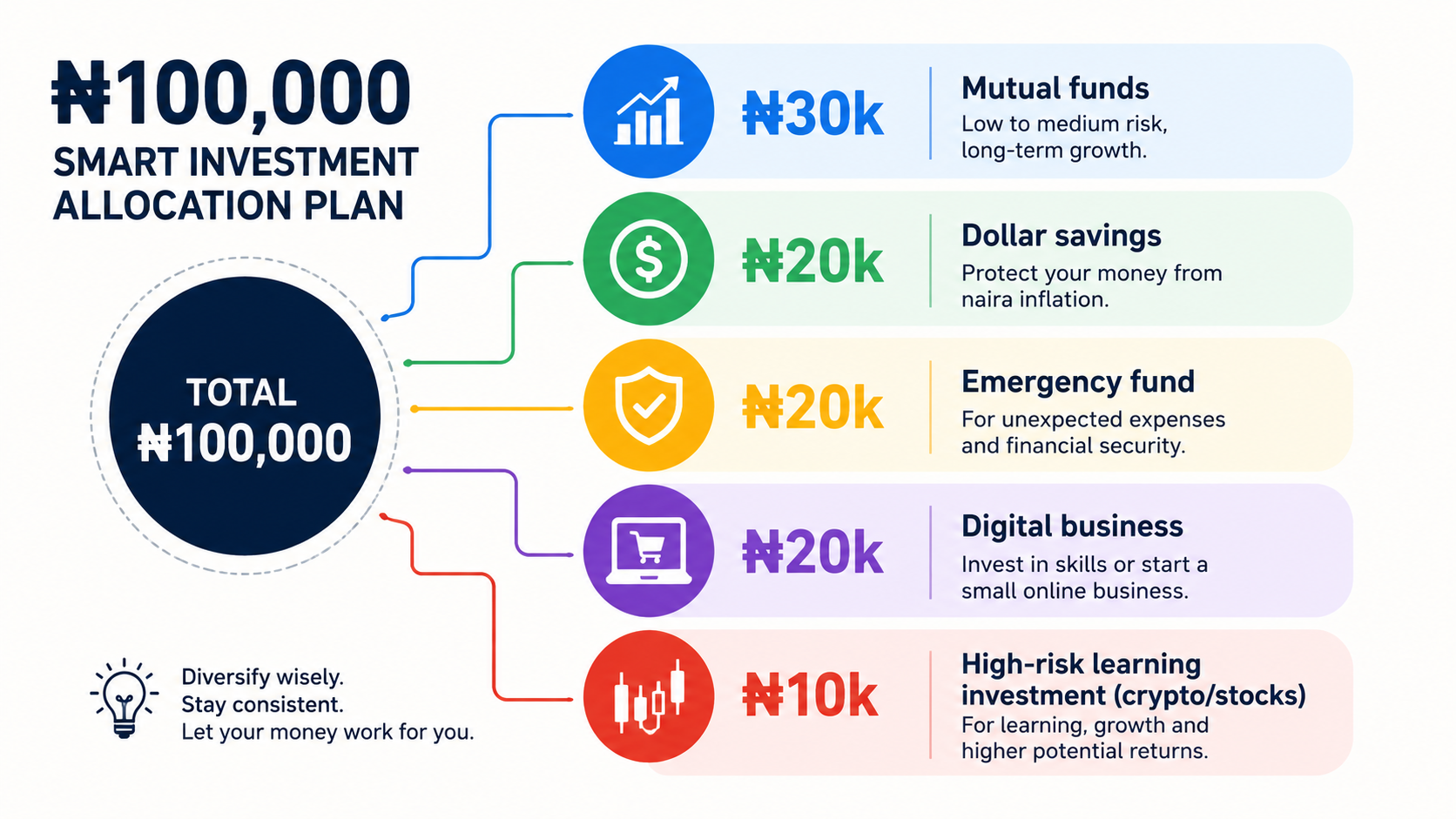
I grew up in one of my grandfather’s properties. He built several houses, and many of his children inherited them. My dad once told me that the ₦25,000 paid to the contractor to start one of those projects was physically carried on his head in a sack when they wanted to pay. Today, ₦100,000 hardly feels enough for transportation and monthly expenses for many Nigerians. Yet with the right investment structure and consistency, that same ₦100,000 can be the start of financial freedom.
Many young Nigerians are asking an important question: ‘How do I stop merely spending money and start growing it?’ But there is another problem. People are tired of hearing investment stories because many have already been burned. Some invested in apps that crashed. Others locked money in platforms that suddenly stopped paying. Some even watched inflation quietly reduce the value of their savings while the money sat in their bank account doing nothing.
In short, for many people, investing is more like a second term for losing money and honestly? Their fear makes sense. However, the good news is this: Investment is not gambling when you understand what you are doing. With the right knowledge, ₦100,000 can become more than emergency money. It can serve as a starting point for wealth creation, passive income, business ownership, digital investing, and long-term financial stability.
In this guide, I will show you realistic investment opportunities in Nigeria you can start with ₦100,000, including the risks involved, expected returns, and platforms beginners can use safely.”
Savings or Shavings Account
If you put 100,000 naira in a savings account today, just being credited that 100,000 in Nigeria means you will lose #50 instantly. That is, if your bank is not immediately billing you for any other monthly maintenance fees. It’s not their fault entirely, too, because when you think about the fact that the bank has to make money one way or the other, or how do they make money if they are only keeping your money for you?
What about the effect of Inflation on the Naira? As of April 2026, Nigeria’s headline inflation rate stands at 15.69%, based on the latest report from the National Bureau of Statistics (NBS). This is up from 15.38% in March 2026.
Put simply, prices for goods and services in Nigeria keep rising, while the value of money is slowly declining. For example, if something used to cost ₦10,000, it might now cost ₦11,500 or even more. This also means that if you leave your money sitting without investing or growing it, its value will slowly decrease. Inflation has raised the overall cost of living, putting more pressure on salaries and incomes.
To put it simply, ₦100,000 today does not buy as much as it did a few years ago. This is why many people are now searching for better ways to grow their money rather than just saving it. Investing helps you take your capital, which is like a seed, so that it can produce other seeds that can all grow to become a massive wealth estate for you financially.
But before you invest one naira, there is something you must understand, which is why Nigerians lose a lot of money to wrong investments.
“I have invested in banks and other apps, but they eat my money.”
Mr David speaks for many new investors who have lost money to scammers or been let down by broken promises. First, saving in a bank is not the same as investing. Saving helps the bank more than it helps you. You should not expect to get rich by saving money in the bank. If you feel let down after saving for a long time, your expectations may have been unrealistic.
Firstly, Banks are built to avoid risk. Even if they take risks, they do it quietly and make sure they are protected. Because banks avoid risk, you cannot expect high returns from saving with them. Low risk means low rewards. If you want to save before investing, a bank is a good place to start, but not the best place to grow your money.
Luckily, Cowrywise and other investment apps now let you invest with as little as 1,000 naira in very juicy investment offers. Click my referral link to get instant entry, and you can start your investing journey without saving large amounts: https://get.cowrywise.com/r/Oluwawyi
The second reason I think many people have been disappointed with many investments is the Return on Investment narrative. Risk is calculable, but what of uncertainty? Many investments are victims of uncertainties, I mean events that they didn’t even see coming at all. If anyone tells you their investment is not prone to risk at all, then it is either that they are lying to deceive you or they have a solid insurance structure that cushions their losses. In fact, the first way to identify a scam opportunity is when they sell something that is 100% risk-free. The financial world does not exist without risk and uncertainties, and not being aware of the risk to reward ration on your investment can be the greatest undoing of your investment ambition.
Having said this, I would go ahead and quickly show you how to recognise a legitimate investment from one that is not.
What Makes an Investment Legit?
When you are looking to know the legitimacy of an investment, a number of things stand out, and if you carefully examine all of these, it’s almost impossible to lose your money in the process.
Founders This is simple. Are the founders traceable to any prior failed projects? If yes, then that is a big red flag. If you can’t find the founders, check the company’s history. Have they raised any capital from reputable venture firms or angel investors before? If they have, then they are most certainly legitimate.
Registered company The Security and Exchange Commission (SEC), Nigerian Investment Promotion Commission (NIPC) and the Central Bank of Nigeria (CBN) regulate investment firms in Nigeria, where applicable. If your investment broker is not regulated by any of these regulators, I can assure you that you will soon be crying with regret over losing your hard-earned money. A simple Google search or prompt on ChatGPT can save you from a whole lot of issues in the future.
Clear business model An investment bank or broker makes money from commissions or by investing or doing business with capital, not primarily through a multilevel referral scheme. If you have to refer someone to keep your investment scaling, you are not investing; you are likely in a Ponzi scheme. The best way to avoid this is to not start at all.
Transparent returns Realistic promises are the only thing that works; if you are getting unrealistic promises from your broker or investment firm, you should be assured that you will lose your money. It’s not bad to take risks, but if you can’t afford to lose it, don’t trade with it. If losing an amount ends your financial journey, you should either be saving or investing in a simple, safe, and steady investment mix that preserves your capital with little return.
Withdrawal history Withdrawals are what guarantee that your investment worked. Make sure you read your broker’s terms and conditions, especially those related to withdrawals, before you invest. I know a friend whose parents invested in Ethereum in its early days, but the broker didn’t give them keys or the wallet. Now they don’t even know how to access the investment or the person who invested on their behalf.
User reviews This is where the rubber meets the road. If you can find a real review from a real user and not a user-generated content that was farmed, then you might just be able to honestly predict the reality of investing with that broker or investment firm. Try going through reviews on the Google Play Store and Apple App Store, if they have mobile apps, to see what people who really use the app think.
Investment Mixes You Can Start with ₦100,000
A. Treasury Bills & Fixed Income Treasury bills and other fixed-income investments are considered low risk because they are backed by the government or major financial institutions. Your money is usually safe, so these options work well for anyone who wants to avoid losses.
These investments are great for beginners. You do not need advanced financial knowledge or much effort to manage them, so new investors can start growing their money without much stress. Fixed-income investments give you steady and predictable returns. You can usually tell how much interest you will earn, which helps you plan your finances more easily.
B. Mutual Funds Mutual funds are run by experienced professionals who pick investments for you. This way, you can benefit from their expertise without spending time analysing individual stocks or bonds yourself. One of the main benefits of mutual funds is diversification. Your money is spread across many investments, so you are less likely to lose everything if one investment does poorly. A convenient choice for people with busy schedules. Since a professional manager handles all the investment decisions, you can invest without constantly monitoring the market.
C. Agric Investment Platforms Agric investmeAgric investment platforms are riskier because they depend on things like weather, crop yields, and market prices, which can change unexpectedly. The rewards can be good, but there is also a higher chance of losing money than with safer investments. It is better to approach agric investments with caution. Always do your research, understand the risks involved, and avoid investing more money than you can afford to lose.
D. Nigerian Company stocks
When you invest in Nigerian stocks, you own shares in local companies. This lets you benefit from the country’s economic growth and earn money through dividends and rising share prices.tal gains.
Dividend investing means choosing stocks that pay regular dividends to shareholders. This gives you a steady income, plus any gains if the stock price rises. When investing in stocks, it is crucial to think long-term. Prices can rise and fall in the short term, but staying invested for years usually gives you a better chance of good returns. Certificates help protect your wealth from the effects of naira inflation. By holding assets in a stable foreign currency, your money is less likely to lose value over time due to local currency fluctuations.
You can use options like Eurobonds or dollar savings accounts to invest and save in US dollars or other stable currencies. These choices can deliver good returns while reducing the risk of local currency depreciation.
F. Cryptocurrency Cryptocurrency investments are very risky but can also yield high returns. Prices can change a lot in a short time, so you might make big profits or face large losses quickly. In cryptocurrency, it is essential to educate yourself about how it works. Understanding the technology, the risks, and the market trends can help you make informed decisions and avoid costly mistakes.
Avoid investing in so-called ‘hype coins’ or cryptocurrencies that are heavily promoted but lack strong fundamentals. Stick to established coins and always research before investing any money.l Business
G. Start a Business online
Starting a small digital business is powerful because it shifts you from a passive investor to an active wealth builder. Running your own business lets you create new income streams and learn valuable skills.
Examples: – Mini importation – Blogging – YouTube – Digital products – Printing business
You can easily share these digital business ideas with others. Sharing real examples and success stories can inspire more people to take action and begin their own business journey.
Mistakes to Avoid When Investing ₦100,000
Chasing investment opportunities that promise very high or unrealistic profits often leads to disappointment or loss, as such deals are usually too good to be true.
Putting all your savings into investments without keeping some cash on hand can leave you at significant financial risk if an emergency arises or your investments don’t perform well.
Not saving money for emergencies before investing can leave you open to unexpected costs and force you to sell your investments when it’s not a good time.
Making investment choices just because of trends or excitement on social media can lead to poor results, since these sources are often unreliable and don’t align with your personal goals.
Neglecting your money without proper research or understanding the risks involved can lead to losses and missed opportunities for more suitable investments.
Final Key on Investing your First #100, 000
₦100,000 may not seem like much today, but many rich people began by learning to handle small amounts carefully. The aim is not to get rich quickly. The aim is to build money smarts, steady habits, and patience. A small investment made carefully is stronger than a large investment made with emotion.
If social media were accurate, every startup founder would be raising millions and ‘building the future. But the reality of what being a founder looks like in 2026 appears very different, because when you step away from the headlines and talk to some of these business owners, the picture becomes much more complex.
Where, for years, startup culture was dominated by motivational content that made entrepreneurship look like a straight line to success. But in recent years, more founders have begun to speak honestly about the challenges behind the scenes. Conversations about burnout, failed startups, layoffs, pivots, and financial pressure are becoming more open.
Influential startup founders like Jason Fried, co-founder of Basecamp, and Paul Graham have consistently pointed out that the startup journey is far more difficult than it appears online. With their simple message, “building a company takes time, resilience, and a willingness to face uncertainty.”
And the truth is, funding doesn’t guarantee success. Startups like Convoy raised over $1 billion, while Quibi burned through nearly $1.75 billion and still shut down. It’s a reminder that behind the hype, building a startup is often messy, uncertain, and far from straightforward.
Are you thinking of starting an investment portfolio, but each time you want to, you think, “How can I start investing when all I can afford is just 10,000 naira”? Which is less than $ 10 at today’s exchange rate. Many Nigerians think investing is only for the rich, bankers, or people who earn a lot each month. That is not true anymore. Today, with digital tools, ₦10,000 can be the start of your investment journey if you use it well.
The truth is this: wealth is not just about how much money you begin with, but about how soon you start, how steady you are, and how well you make your money grow over time. And by early, I don’t just mean starting young; I mean deciding to start today. Today is the earliest time you can begin if you haven’t started yet.
My first entry into crypto was about $5 I bought through Binance P2P back then, when Binance offered it to Nigerians. I could only afford to test with $5, and a little over a year later, I had made transactions in the hundreds of dollars, in fact, over a thousand dollars in crypto alone.
Why ₦10,000 Matters More Than You Think
If you ignore the value of 10,000 naira, you are likely not to appreciate the value of a million naira. To explain, 1,000,000 is just 10,000 repeated 100 times. Many people earn more than a million in a year, but not many can say they have saved 1,000,000 over ten years. Why? Because they ignored the small amounts, waiting for a big windfall that might never come.
With growth, reinvested earnings, and regular effort, it can grow much more over time.
More importantly, you are building a winner trait: investing.
Many wealthy people started with small amounts, and today they control unimaginable wealth. The key is the discipline of saving and growing what they have saved already. Let’s look at a few key things to note.
Savings vs Investing: Know the Difference
Before we start talking about investing, we need to understand that the first step might be practising a rare habit many people lack: saving. Saving means setting money aside for safety or short-term goals. The purpose of saving is to help you gather a large amount of money to put into a project, and in this case, your investment portfolio.
Personally, I have tried saving in different ways, but I must be honest that saving can be very hard. I notice that as soon as I save for emergencies, something unexpected happens. Saving is connected to investing because, depending on the kind of investment you want, you might need to save about 10,000 over time to get started (though many apps now let you invest with just 10,000 naira).
What really is investing?
Investment means putting money into assets that grow in value and generate income for you over time. Examples include mutual funds, stocks, Treasury bills, farming businesses, and, less often, starting or funding your own business.
Investing helps your money grow, but it begins with one simple rule: save first, then invest. If ₦10,000 is your last money for food or urgent bills, it’s better not to invest it yet. But when you’re ready, ₦10,000 can open opportunities—it might not buy luxury, but it can buy your first investment share, entry to financial markets, good habits, money knowledge, and a better future.
Best Ways to Start Investing with ₦10,000 in Nigeria
Mutual funds pool money from many investors and are managed by professionals. This makes them a good option for beginners because they offer a low entry amount, lower stress, and diversification. Investing in mutual funds is better than leaving your money idle, and some Nigerian platforms allow you to start with small amounts. Mutual funds are ideal for people who want passive growth.
These are lower-risk options, best suited for conservative beginners, short-term goals, and people learning to invest gradually. While returns may not be massive, they are usually steadier than a random scheme, making them a reliable choice for those prioritising safety and stability.
3. Fractional Stock Investing
In the past, buying major shares required significant capital, but today some apps let you buy fractions of stocks. This means you can own part of Nigerian or international companies without needing huge amounts of money. Fractional stock investing is good for long-term growth and expands your investment opportunities.
4. Invest in a Skill
Sometimes the best first investment is in yourself. With ₦10,000, you can enrol in courses like graphic design, video editing basics, digital marketing, writing, or learning AI tools. Developing a profitable skill can return more than many traditional investments and boost your earning potential.
5. Small Reselling Business
You can use ₦10,000 to start a small reselling business by buying and selling accessories, snacks, digital products, recharge/data services, or mini household goods. Generating active income from a small business can be a smart first step before moving on to passive investing.
How to find the right Apps and Investment Platforms in Nigeria
Next, check the rules for withdrawing money and the fees they charge when you invest or withdraw. Don’t just believe their ads; read honest reviews online before you start investing.
Ponzi Schemes are known for one thing: unrealistic gains. They promise to double your money in days through methods that are neither fundamentally nor technically reasonable. Ensure you avoid Ponzi schemes as a starter for many reasons, which I will describe in another blog.
Run from any investment that is too good to be true. Every investment is a landmine, and sometimes you will step on a few; smart investors have only mastered how to win more than they lose.
2. Investing Your Feeding Money
I have come to realise that while living within your means is a cliché, we must also clearly tell people that they have a responsibility to take care of their bodies and their immediate family in the most affordable and reasonable way. This means that if you are hungry and your basic needs are not being met, it might be the first thing to invest in. If you take money that should go toward your basic needs and put it into your investment portfolio, you will soon sell it to cover those needs. The sad reality is that you will have to sell under any condition, which could be in an unfavourable market.
3. Impatience
I have lost more money being impatient than in bad investments. I realised that emotional management is the key to being a successful investor. Knowing when not to step into a trend and when to take your profit can make the difference between long-term success and failure. If you want the whole profit now, then be ready for whatever comes in between. Always remember that your goal is to stay long enough till the tables turn in your direction.
4. Following Hype
Fear of missing out (FOMO) is the biggest trap many investors fall into. They assume that not investing today will cause their entire investment structure to crumble. Let me tell you the truth as someone who is very experienced in investment psychology: investing in a rush is why you will never master what works and what does not. If you can’t wait, then you are probably notion your right senses. So don’t follow the crowd, follow your conviction.
What to Do After Your First ₦10,000
Your first investment is your first big step, not your last. No single tree makes a forest. Rarely does one investment make you a success, unless you bought BTC in 2009. After your first investment, automate your investing so you save before you think. Maintain your investment amount steadily, then increase it as your finances grow. If you hold shares that pay dividends, reinvest them. It’s better to buy regularly and watch your portfolio grow than to diversify.
Don’t forget that discipline is the key to successful investment. If you find it difficult to invest, you will need a broker who forces you to commit over a period. I use Cowrywise for my naira and even for my USD mutual fund. It also allows me to have a locked savings account that cannot be withdrawn. This gives me an excuse not to touch the cash, and the amazing part is that it even offers as much as a 10% APY. I would lose money in my savings account with the regular bank, but with Cowrywise, you can earn as you save.
In the first part of this series, we explored the AI skills every sole proprietor can learn to increase sales and 10X income. However, growing revenue is only one side of building a successful business. The other side is understanding your numbers. I have put together 5 Cashflow Tools To Track Business Health as a Sole Proprietor
Many businesses fail not because they lack customers, but because they lack financial understanding. (Survey: Half of US small businesses encounter fiscal challenges due to a lack of financial literacy, 2024)
If you do not track your income, expenses, and profitability, it becomes difficult to scale sustainably. This is why having the right financial tools remains essential. The best platforms help you monitor your business health, control cash flow, and make smarter decisions that support lasting growth.
In today’s blog post, we will explore five powerful financial tools to help any sole proprietor manage their finances effectively.
1. Accounting Software to Track Income and Expenses
One of the most important tools for any business owner is accounting software. This type of software records all your financial dealings and helps you understand where your money is going.
Services like QuickBooks and Xero allow business owners to automatically track income, categorise expenses, and generate financial reports.
These tools are especially useful for sole proprietors because they simplify bookkeeping without requiring deep accounting knowledge. Instead of managing spreadsheets manually, you can see your financial position in real time.
Understand whether your business is truly profitable.
When you clearly see your numbers, it becomes easier to determine areas where you can reduce costs or increase revenue.
2. Cash Flow Management Tools
Cash flow is the lifeline of any business. Even profitable firms can struggle if they do not manage when money comes in and goes out. (Cash Flow Management for Financial Stability: Profitability, Debt Service, and Projections, n.d.)
Cash flow tools help you predict and control financial movement inside your business. They show whether you will have enough funds to pay bills, invest in marketing, or hire help.