Category: Writing Page 1 of 2

The New Way Writers Are Growing Readership in 2026

If you’ve been writing consistently but still wonder how writers grow readership in 2026, you’re asking the right question.

Just a few years ago, many bloggers counted on SEO + volume = traffic. Today, that equation is shifting. Search engines, social platforms, newsletters, and even human behaviour around content consumption have all changed. The old model, write more, publish often, wait for Google clicks, just doesn’t work like it used to.

According to global blogging data like Webtribunal, there were over 600 million active blogs worldwide in recent years, with millions of new posts published daily, and billions of readers engaged monthly. But that sheer volume means competition is fierce and visibility is no longer automatic.

The truth is this: quality content is still necessary, but it no longer drives growth by itself, as I discussed in a previous article Why Good Writing Alone Is Not Enough to Get Readers in 2026. Writers today grow their readership through strategy, rhythm, platforms that meet readers where they are, and distribution that connects rather than just publishes.

Here’s how writers are actually growing today, and how you can too.

1. Writers Are No Longer Betting on One Platform

One of the biggest changes in how writers grow readership in 2026 is that successful writers are no longer loyal to a single platform.

A few years ago, writers were told to “pick one platform and go all in.” Medium, for example, became a major home for many writers because of its built-in audience. That advice is now outdated. Medium still works, but only as part of a larger system.

Although publishing on your own blog still matters, it’s your long-term SEO asset and brand hub. People still search for content, and having a well-organised blog helps you appear in search results over time. But reaching new people often requires expanded distribution.

If you look closely at how top writers operate today, you’ll notice a pattern:

  • WordPress or Ghost blogs as an owned SEO base
  • Medium publications to tap existing audiences
  • Substack or Beehiiv newsletters to build direct followers
  • Social channels (like LinkedIn, X, Instagram Reels, TikTok) to signal value and drive traffic back

Several writers have openly shared that relying on one platform is risky because algorithms change, payouts fluctuate, and visibility can disappear overnight. This is why many writers now treat platforms like Medium as traffic sources, not final destinations.

Platforms like Substack have grown rapidly because they combine writing and newsletters into one, allowing creators to build a direct relationship with readers rather than relying on search alone. Substack’s built-in discovery features and email subscription focus help writers attract and retain audiences more predictably than traditional blogs alone.

Even brands are using newsletter platforms for storytelling and engagement outside the noise of short-form social content, for example, Rare Beauty has used Substack to create engaged conversations and valuable visits that don’t depend on Instagram algorithms.

The lesson? Writers who understand how readers behave across platforms grow readership faster than those who rely on any single channel.

2. Repurposing Across Formats: 10x Value from One Idea

One clear pattern among writers who know how to grow readership in 2026 is this: they don’t treat writing in isolation. They treat ideas as multi-format assets.

A single topic can become:

  • A long-form blog post
  • A newsletter thread
  • Short-form video (YouTube Shorts, TikTok, Instagram Reels)
  • LinkedIn or X posts
  • Podcast segments
  • Infographics and carousel posts
Why Good Writing Alone Is Not Enough to Get Readers in 2026

How many times have you written an article you genuinely liked, hit publish, checked your stats and saw almost nothing? No traction. No engagement. Sometimes, not even a single comment. We are about to discuss everything about “why your articles are not getting reads?” 

If you’ve ever sat there wondering why your articles are not getting reads even though you know the writing is solid, you’re not alone. Many writers are quietly dealing with this, and it’s not because they suddenly forgot how to write.

“The internet is no longer short of good writing. It is short of attention.”

That single sentence explains why good writing alone is no longer enough to get readers today. The online writing space is crowded, competitive, and fast-moving. Millions of articles are published every week, and readers are constantly choosing what to ignore. This means the rules have changed. Quality still matters, but it is no longer the deciding factor.

1. Good Writing Is Everywhere, So It’s Not an Advantage Anymore

One of the biggest mindset shifts writers must make in 2026 is accepting this truth: good writing is expected, it’s like the basics. 

For instance, as a reader, before scrolling through these points, you already assumed the blog would be clear, readable, and grammatically sound, and you feel a little bit disappointed in the skill of the writer when there are a lot of errors that you can glaringly identify. Platforms assume the same too. That means quality writing is no longer what sets you apart; it is simply what allows you to participate from the outset.

This is why many writers feel confused. They did “everything right”: a strong introduction, a clean structure, and useful ideas. Yet the article still struggles. The problem is not the writing itself, but the assumption that quality automatically earns visibility.

Think about how you read online. When you search for an answer or scroll through a platform, you don’t stop because something is “well written.” You stop because:

  • the headline speaks directly to a problem you have
  • the angle feels fresh or specific
  • The opening makes you feel understood and just briefly explains that it is exactly what you are looking for.

So, when writers ask why their articles are not getting reads, the answer is often that their work sounds fine but not distinct. In a crowded market, being good is common. Being clear about why this article matters now is what earns attention.

2. If People Can’t Find Your Article, They Can’t Read It

Another hard truth many writers avoid is this: publishing is not promotion.

In earlier years, platforms did more of the heavy lifting. Today, visibility is influenced by early engagement, sharing behaviour, and external signals. If your article is published and then abandoned, it is unlikely to travel far.

This doesn’t mean spamming links everywhere. It means understanding that writing online is no longer just about expression; it is also about intentional distribution.

Writers who consistently get reads usually do a few quiet things differently:

  • they share context when posting links, not just the link itself
  • they participate in conversations related to their topic before and after publishing
  • they repurpose ideas across platforms like LinkedIn, newsletters, or X
  • Be very strategic about your distribution after posting

3. Sounding Like Everyone Else Is the Fastest Way to Be Ignored

One uncomfortable reason why your articles are not getting reads is that they sound familiar, it’s really not bad, it’s just that it makes you too familiar, so you don’t stand out anymore.

One thing everyone must understand about the internet is that it is full of well-structured articles that explain ideas clearly but say nothing in a way that feels personal, specific, or lived in. When readers feel like they have read the same article before, even if they haven’t, their attention drifts quickly.

This often happens when writers rely too heavily on:

  • generic introductions
  • recycled examples
  • safe language meant to please everyone

In contrast, articles that perform well usually carry a sense of perspective. They feel like someone who has been there is talking, not summarising. This does not mean oversharing or being dramatic. It means grounding ideas in observation, experience, or clear reasoning.

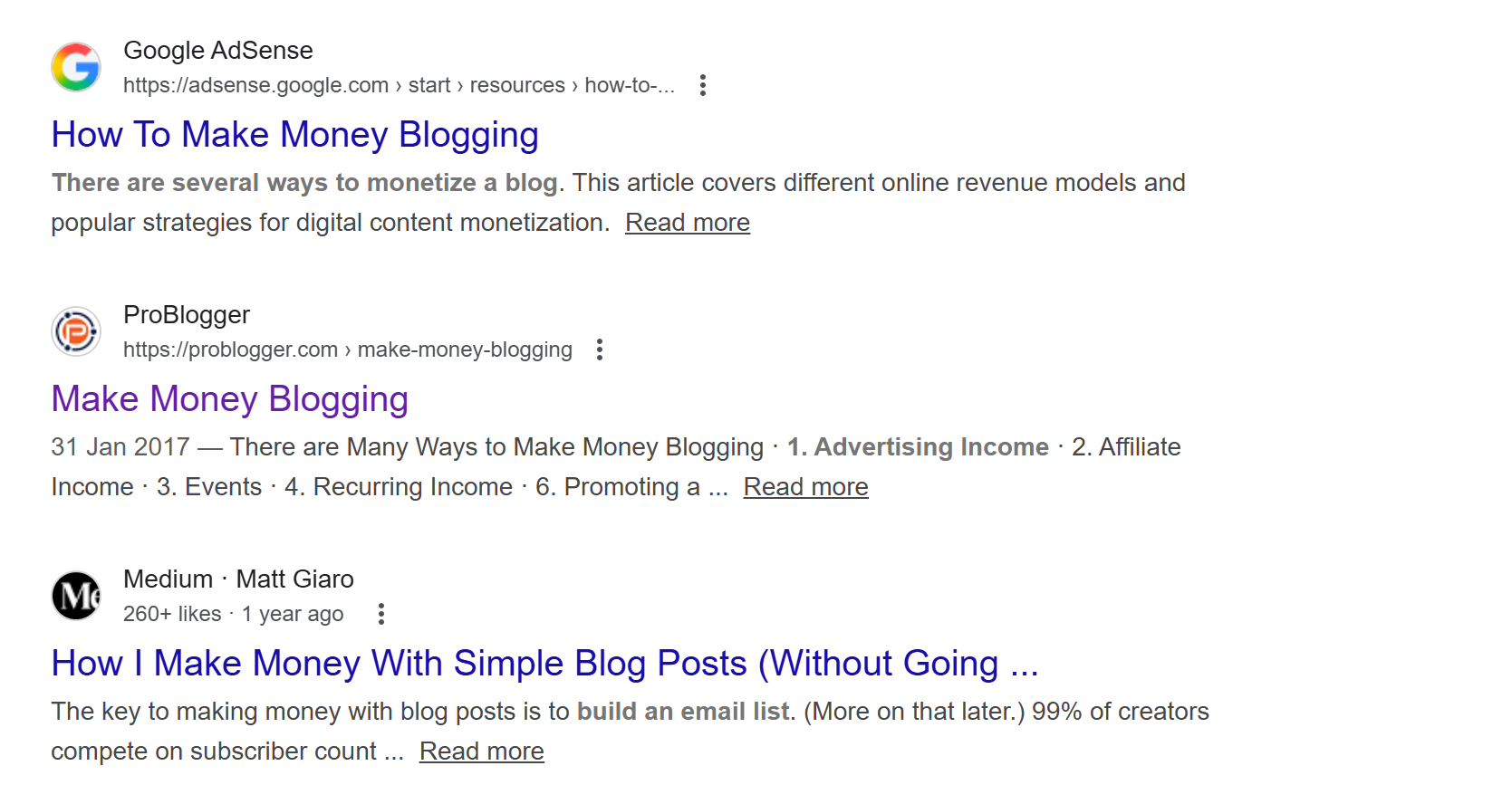
For example, two articles can explain the same concept. One reads like a guide. The other reads like a conversation that says, “Here’s what I noticed. Here’s what worked. Here’s what didn’t.” Readers remember the second one. See example below: 

I took a screenshot of my browser when I asked a question on “How to make money with blogging?” Based on the imagery above, if you were to click on anything, which would you quickly go for? I bet that it’s: How I Make Money With Simple Blog Posts (Without Going Viral), right? 

So, if you’re asking why your articles are not getting reads, look closely at whether your writing reflects you or just information. Information is everywhere, and a good personal perspective creates a connection with readers and even leads to more purchases of what you are selling.

How to Be a Better Writer and Earn More in 2026 (Without Burning Out)

how to earn as a writer in 2026

If you’ve been writing consistently but your income still feels stuck, you’re not alone. All you need is this one blog to learn how to earn more as a writer in 2026.

Many writers are producing more content than ever, blog posts, newsletters, threads, essays, yet earning less than writers did a few years ago. The reason isn’t a lack of talent. It’s that the rules of writing for money have changed.

You too can say that Platforms are now very much smarter. Editors are pickier. AI has flooded the internet with average content. What gets paid for now is not just good writing, but strategic writing, writing that understands platforms, niches, and how attention turns into revenue.

What I propose for you to be able to earn more as a writer in 2026 is not to write harder, but write differently.

This guide breaks down everything and what experienced writers are quietly doing to improve their craft, position themselves better, and increase their income, without burning out or chasing every new platform.

1. Write Where Money Already Moves

One of the biggest mistakes writers make is focusing only on writing better without paying attention to where they are writing. In 2026, earning more as a writer starts with understanding that not all platforms are built to pay writers well, no matter how good the work is.

High-earning writers intentionally publish in spaces where money is already circulating. These platforms attract high readership, decision-makers, founders, professionals, and businesses. Because when the audience has buying power, the writing naturally becomes more valuable. This is why publications focused on marketing, technology, product, business strategy, and professional growth consistently pay better than general lifestyle blogs.

Platforms like Better Marketing, UX Collective, and The Startup on Medium work because they attract readers who are actively trying to improve outcomes in their work or businesses. On the independent side, platforms such as Smashing Magazine or Contently pay professional rates because their content directly supports industries that generate revenue.

This is also why owning your own blog or newsletter matters. When you write consistently on a personal blog or Substack, you create a space where your ideas compound over time. Search traffic, referrals, and shares can bring in readers months or even years after publication. Writers who learn how to earn more in 2026 and are doing the work are not chasing attention everywhere; they are placing their work where value already exists. I would suggest you go over the articles below once you are done reading this: 

6 Writing Platforms That Still Pay $100+ Per Article in 2026 (No Client Hunting)

Most people assume online writing only pays in exposure, likes, or small change. For years, many writers publish article after article for free, hoping that someday it will lead to money, clients, or recognition. The truth is simpler and more uncomfortable: many writers stay unpaid because they don’t know where to publish. But not anymore. With this guide, you will learn the writing platforms that pay in 2026.

There are platforms that already value good writing. Platforms where you don’t need to chase clients, negotiate endlessly, or prove yourself on social media first. You show up, submit strong work, and get paid per article.

So, if you’re looking for writing platforms that pay per article in 2026, realistically, not magically, this list will point you in the right direction. These are places where one well-crafted piece can earn $100 or more, without needing years of experience or a massive audience.

1. Better Marketing 

Better Marketing is one of the strongest examples of how writing tied to business value is well paid in 2026. The platform focuses on marketing strategy, branding, audience growth, content creation, and the creator economy. This is not a place for vague motivation or surface-level tips. Articles here break down how brands grow, why campaigns succeed or fail, and how creators and businesses can position themselves better in competitive markets.

The reason Better Marketing pays writers well is simple: marketing content attracts decision makers. Founders, marketers, consultants, and business owners actively read this publication, and that audience directly converts into paid Medium subscriptions, tools, and services. Because of that, writers who publish strong, practical pieces often earn well over $100 per article through Medium Partner earnings, with some pieces generating much more over time.

Does Writing Really Pay? 4 Truths I Discovered That Will Change How You Think About Money

Writing paid my bills. Not overnight, not by accident, but by intention and systems. If you’ve ever wondered, ”Does writing really pay?”, the short answer is: yes, but not in the way many expect. 

Writing is more than putting words together. It’s a way of thinking clearly, solving problems, influencing decisions, and packaging ideas into products that people are willing to pay for. 

In this blog post, I will be sharing my own truths on this question, and if you can truly read it through, you can actually make very good money off your writing skills. 

Below are four truths I learned that changed my income and how I treat writing as work.

Truth 1: Writing Turns Ideas Into Income by Forcing Clarity

Before writing anything, an idea feels perfect in your head. But the moment you start typing, researching, you begin to see the gaps.

  • Who is this for?
  • What problem does it solve?
  • Is it useful?
  • Why should anyone care?

Writing forces you to answer these questions, test an idea end-to-end, from headline to solution, and that process exposes what’s sellable, be it a new product, course, or service idea.

How to Position Yourself as a Writer in 2026 (Even If You’re Not“Established” Yet)

Subscribe to continue reading

Subscribe to get access to the rest of this post and other subscriber-only content.

Why Now is the Most Profitable Time To be a Writer (Even New Writers)

If you want to become a writer, now is the best time to start. Unlike in 1998 when newspapers hired many writers, 2010 when blogging was popular, or even 2016 when poetry was the order of the day on Instagram, 2025 offers the best opportunities. This is a profitable time to be a writer and earn money.

Why is now the best time?

Writing has changed. It is no longer just a skill; it is a valuable tool. Today, writing can be a product, a service, a brand, a business, or a way to grow an audience without showing your face. The good news is that getting started is easier than ever.

All you need is to understand what type of writer you want to be and how your work can make money.

Why is Now the Most Profitable Time To Be a Writer? And how can you take advantage of these opportunities?. All will be adequately discussed in this blog post. 

1. Writing Has More Income Streams Than Ever Before

Before now, a writer had two options: publish a book or get hired by a newspaper. Today, anybody can make money even without being famous, simply by placing their writing strategically. 

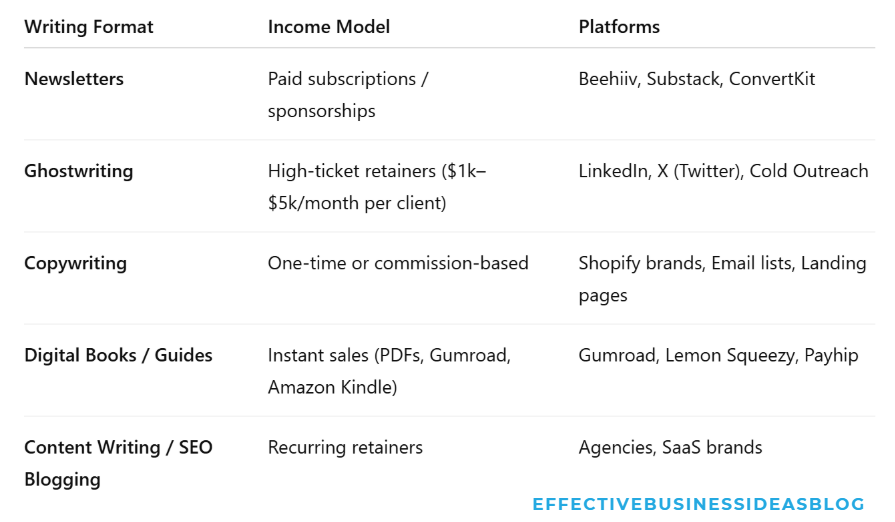
See the various ways writers are earning in 2025:

According to ConvertKit’s 2024 Creator Report, writers earning over $100k/year increased by 43% in just one year. And guess what? Most of them don’t even have “bestselling author” attached to their bio.

The gap is no longer between published and unpublished writers, it’s between visible and invisible writers. For instance, there is a YouTube channel that makes videos about Software engineering and interviews about tech and startups. It has 146k subscribers on YouTube, and its Substack newsletter, “The Pragmatic Engineer,” is crossing $1M per year as a one-person media brand. 

This just attests to the point that nobody needs permission anymore. All you need is distribution, and for the first time in history, platforms are rewarding writing by including algorithmic reach and direct monetisation.

2. AI Isn’t Replacing Writers (It’s Making the Smart Ones Richer)

Let’s settle this: Artificial intelligence tools aren’t here to replace writers, they’re here to replace slow writers.

People who treat AI like a cheat code instead of a competitor are producing five times more work in half the time, which means they earn faster, pitch faster, publish more, and get seen more. Before now, writing one blog post could take a whole afternoon. Today? You can outline in Notion AI, draft in ChatGPT, refine with GrammarlyGO, and schedule with Typefully, all in under an hour.

That doesn’t make writing less valuable, it makes your time more useful. Even bestselling author Morgan Housel put it best in an interview: “AI won’t kill original thinking. It’ll kill lazy phrasing.”

So instead of asking, “Will AI replace writers?”
The real question is: Will you be the writer who uses AI to write 10x more… or the one who gets left behind because you’re still typing like it’s 2012?

If you are ready to build a profitable business or career as a writer, using AI tools and resources, now is the perfect time to multiply your earnings. 

My Realities of Working Remotely While Living at Home With Parents

Working remotely while living at home with parents can be filled with funny and not-so-amusing realities. When I first started freelancing in 2020, it was during my National Youth Service Corps (NYSC) year, a one-year compulsory program for Nigerian graduates to serve the country. That was also when I stumbled into the world of online courses, freelancing, and remote work.

Since then, I’ve worn many hats: from learning the skill of writing and social media management, to leading the content team at a top advertising agency here in Nigeria, a country in Africa, before resigning in 2023 to fully chase the remote-work life.

The idea of remote work sounded like the dream at first: no traffic, no endless commuting, no Lagos “rush hour” stress. But the reality of working remotely while still living with family? That’s a whole story on its own. From juggling household expectations to dealing with distractions and still chasing deadlines, the past three years have been full of funny, frustrating, and eye-opening experiences.

Here are some of the realities I’ve faced (and maybe you’ll relate to if you’ve worked remotely, whether in Nigeria, Kenya, South Africa, or even the U.S., and anywhere in the world):

1. Morning Routines Aren’t Really Yours

Many people believe that working remotely gives you full control over your time. However, this isn’t always true, especially in an African home.  I prefer to work out early, from 6 a.m. to 7:30 a.m. But since I started working from home, my mornings are a mix of jogging before 6 a.m., family prayers from 6 to 7 a.m., and house chores right after. By the time I finish, my well-planned “perfect productivity morning” is already disrupted.

It’s hilarious sometimes, I’ve been dressed for a client call when suddenly I hear: “Joy! Won’t you help out with chores!” Harvard Business Review on remote work boundaries shows that even globally, people struggle to draw lines between personal and professional time. In an African household, that line is nearly invisible.

2. Your Peak Creative Hours Can Be Hijacked

As a freelancer and content creator, I work best in the mid-morning or late at night. However, living with family means I face frequent interruptions. Because of this, I often find myself working late into the night, which can hurt my productivity during the day.

For example, I might be focused on writing a blog post and managing my emails when I suddenly hear, “Joy, let’s quickly go to the catfish farm. We have work there tomorrow, and you need to reschedule your plans!” (Yes, my family runs a catfish farm, and those ponds need attention.) You can read about my experiences with catfish farming in another post.

The truth is, no matter how flexible your job is, family responsibilities don’t go away. While you may save money on transport and avoid traffic jams, your work routine must adjust to family life.

Freelancing Is Not For Everyone… Or Is It? The Truth and Lies

When people say, “Freelancing isn’t for everyone,” it often feels like a warning as if only a special group of people can succeed at it. Maybe you’ve heard it from a friend who struggled to find clients or from someone who believes a “real job” is the safer path.

But the truth is, freelancing is not about being a certain kind of person. It is about understanding how things work and finding your own approach. Anyone can succeed at freelancing if they are willing to learn, stay consistent, and adapt to the challenges.

In this post, we will explore why people think freelancing is not for everyone, the real challenges behind that belief, and why freelancing can work for anyone who is ready to give it a fair shot.

Why Writing Every Day Isn’t Enough: 5 Tips to Becoming a Better Writer

Writer's hand captured trying to write

I used to believe that writing every day was the golden ticket to becoming a great writer. Everywhere I turned, blogging communities, writing podcasts, and even best-selling authors echoed the same advice: “Write daily if you want to improve.” So, like many others, I took the advice to heart, but writing every day isn’t enough.

Please don’t get me wrong; I’ve noticed that writing daily has improved my style. I explained it in one of my blog posts, “5 Proven Ways to Keep Writing (Solutions to never feeling stuck),” I mentioned that when I take breaks—whether to enjoy life or spend time with loved ones, I often feel a disconnect from writing after a long hiatus. However, once I created a simple writing routine that worked for me, I found it much easier to keep up.

Despite writing blog posts and journaling regularly, I wasn’t improving as quickly as I’d hoped. Some days, the words flowed easily, while other times, they felt forced, and I found myself repeating the same ideas. Many writers, from beginners to seasoned authors, struggle with this same issue—becoming a better writer requires more than just putting pen to paper.

If you’ve been writing tirelessly but feel stuck, consider exploring these practical resources: ” Getting Started as a Freelance Writer: Skills, Tips, and Resources  and How to Get Money to Fund Your Freelancing Career.”

5 Tips to Becoming a Better Writer

1. Read More Than You Write (But Read Intentionally)

It sounds obvious. But here’s the thing: most people read passively. They read for entertainment or to pass the time, but rarely do they read with the goal of improving their craft.

One of the best pieces of advice I ever heard was, “What you read shows you what you should be writing.”

If you want to write better, read like a writer. Pay attention to how authors structure their sentences, how they introduce ideas, and how they hold your attention. Explore different writing styles, from the crisp, practical language of business blogs to the poetic flow of literary essays.

Consider this: Maya Angelou, one of the most influential writers of our time, once said, “I’m always amazed when people walk up to me and say, ‘I want to be a writer,’ and I ask, ‘What do you read?’ and they say, ‘I don’t read.’ I say, ‘I don’t understand that.’”

Tip: Create a reading habit that reflects the type of writing you want to master. If you want to write better blog posts, read top-tier blogs. If storytelling is your goal, dive into memoirs and novels. 

Resources:

2. Quality Over Quantity (Slow Down and Edit Ruthlessly)

There’s a common myth that more writing equals better writing, but that’s only half true. Yes, practice matters, but mindless writing without reflection will only reinforce bad habits.

I saw this comment on a Medium post:

“Most writers don’t need more writing. They need more training. They write without editing and never analyse how to get better.”

This struck a chord with me. I used to write without critically reviewing my work, but once I started dedicating time to editing, my writing transformed.

The best writers don’t just write; they revise relentlessly. They rework weak sentences, sharpen their arguments, and cut out fluff. This process isn’t glamorous, but it’s what separates average writing from outstanding writing.

Tip: Instead of pushing to publish everything immediately, revisit your drafts. Read them aloud. Ask yourself: Is this clear? Does this hold your attention? Could I say this in fewer words?

Page 1 of 2

Theme by Anders Norén & Customized by Karol K