Wealth is a holistic statement, and it does not only refer to financial stability. Of what good is money if the people you love the most have no connection with you or just hate you for what you have become? However, in this blog post, we will explore very briefly the four levels of financial wealth and the way to get to each of the levels. The tips in this blog will help you identify your level and scale up as quickly as possible at each level.
The first level, financial stability, aims to ensure you can survive with peace of mind. It is at this level that you are able to start saving and accumulate enough tobe able to survive job loss, have a financial buffer, and never borrow for emergencies or rent. At this level, you are able to stay afloat in the month, and then, from your accumulated savings, are able to handle any emergency that is within a certain threshold.
This level is where you can start talking about financial security and control. You’ve moved beyond living paycheck to paycheck and are now beginning to build a structured and reliable financial stack.
Build an emergency fund covering at least 6 months of expenses
Get health and life insurance.
The fantastic thing about financial stability is that it allows you to focus on growth rather than survival. It’s not about luxury yet; it’s about breathing space and confidence.
Financial friction in romantic relationships can be a significant challenge, but it’s also an opportunity for growth and understanding. As many couples navigate the emotional depths of love, they also face practical matters like managing debts—student loans, credit cards, and mortgages—that could weigh heavily on their shared future. In 2025, the dream remains the same—a love that blossoms into abundance and happiness. With wise debt management and open communication, couples can overcome financial stresses, strengthening their bond and turning their shared dream into a beautiful reality.
I often watch business shows and talks, and it’s amazing how complex our world is running now. It’s built with only money in mind as though money is the most important thing in life. Love is more important than money, so why let poor financial decisions ruin the most beautiful aspect of your life? Let’s consider a few steps you can take as a couple to reduce financial friction in your relationship.
Love is beautiful, but it becomes even more gorgeous when done correctly. That has been the goal of the Romance to Riches series I have been guiding us through. Thought by thought, I have examined the possibilities for lovers to start on the proper financial footing before they even say I do. The decision to begin correctly not only reinforces their love but also strengthens it by ensuring their marriage is built on solid financial ground.
In the second part, we also examined the concept of prenuptial agreements and their role in marriages in this decade. We explored the myths and facts about prenups. For many readers, prenuptial agreements (prenups) seem like a matter reserved for wealthy individuals, such as football players and entertainers, who want to protect their estates. However, the last blog post debunked these myths and revealed the crucial facts about prenuptial agreements, who can benefit from them, and what advantages proper planning offers.
“The path to the CEO’s office should not be through the CFO’s office, and it should not be through the marketing department. It needs to be through engineering and design.” – Elon Musk
What makes engineers and product designers better suited for the CEO’s office? When Elon Musk made this statement, he wasn’t trying to disrespect the finance or marketing department. Instead, he was saying that the strongest companies are led by people who deeply understand the product, how it’s built and how people will use it.
But when the person at the top doesn’t have a deep understanding of these things from product, innovation, and design, the company risks losing its core identity, which is why some companies go into bankruptcy, abrupt closing of business, customers losing interest and many more.
A report by Harvard Business Review points out that CEOs with technical backgrounds are often better equipped to drive long-term innovation because they understand the “how” behind the products, not just the “how much.”
But what does this mean? This blog post will give you a comprehensive understanding of this.
1. What’s Wrong With the CFO Route?
The CFO (Chief Financial Officer) is the money manager of a company. Their job is to balance the books, control costs, and ensure the company remains financially healthy.
That’s vital, but if a CEO only thinks like a CFO, they may focus too much on cutting expenses instead of creating new opportunities.
See how Nokia, which once dominated the phone market, but focused more on profits than innovation. Apple, meanwhile, poured money into design and user experience, and we all know how that turned out.
Marriage has always been a blend of love and responsibility. In 2025, couples are more aware that marriage is more than emotions, but also a legal and financial partnership. As families evolve and finances grow more complex, prenuptial agreements (prenups) are becoming a topic of serious conversation. In the past, it was always seen as an absence of trust; prenups are now considered tools of clarity, protection, and long-term planning.
Today’s blog combines insights from multiple expert sources to provide a balanced view. It explores benefits, misconceptions, legal considerations, and modern attitudes toward prenups. By going back and forth on different perspectives, we can see why these agreements are rising in importance.
Many lovebirds feel over the moon about their honeymoon, the after-party, and the exciting trips ahead. The romance is so intense that everyone notices, even those still waiting to find their own perfect match. Yet, romantic love alone cannot sustain a marriage’s strength, no matter how sweet the walk down the aisle may feel.
Money issues are among the biggest reasons couples argue and lose joy in marriage. One partner may feel crushed by financial pressure, while the other feels powerless or too dependent. Love is sweet, but money matters too, especially when couples want their union to stay strong and happy. These problems are not impossible; open talks about money before the wedding can prevent many future fights. Discussing simple financial basics together early helps love grow deeper and gives the marriage a stronger foundation.
In today’s effectivebusinessideas.com blog post, I will share practical tips for couples seeking financial stability. These ideas work for couples preparing for marriage or those who have just walked the aisle together. They are designed to help you build something sustainable, meaningful, and lasting as a united family.
Tip 1: Build Your Financial Bond Before Saying “I Do”
If you are new to this investment journey, you have probably heard about mutual funds. They are one of the most common ways people invest worldwide. In fact, both beginners and experts use them as a simple way to grow wealth.
But what exactly are mutual funds, and should you invest in them? I will break it down step by step.
What Is a Mutual Fund?
A mutual fund is like a money basket. Many people put their money into the basket, and a professional manager uses this investment pool to buy assets such as stocks, bonds, treasury bills and other securities.
Instead of buying shares in several companies by yourself, you purchase units of the mutual fund. This means you own a small part of the basket and benefit from all the investments inside it.
Some people view poverty in a positive light, but living in lack is something to dislike with all your strength. And, if you’ve ever needed a small amount of cash to fix a problem urgently and didn’t have it, and you are not the type of person who likes to burden others with your issues, you can relate to this list of books that will make you instantly hate poverty and want to work smarter.
Hating poverty means getting so tired of scarcity thinking, excuses, and just‑enough living that you decide: “I won’t live like this again.”
And what does it mean to work smarter? It means understanding how wealth truly works, knowing yourself better, and using practical methods to gain absolute freedom instead of just hustling harder.
The five books I’ll share will make you strongly dislike poverty and inspire you to work smarter. These are not quick-fix guides to getting rich. Instead, they shift your mindset. They help you see poverty not just as a lack of money, but as a way of thinking that traps you. They also show you more innovative ways to escape that mindset.
1. Rich Dad Poor Dad by Robert Kiyosaki: A Must-Read Book to Escape Poverty
Do you really care about wealth if you haven’t read this book?
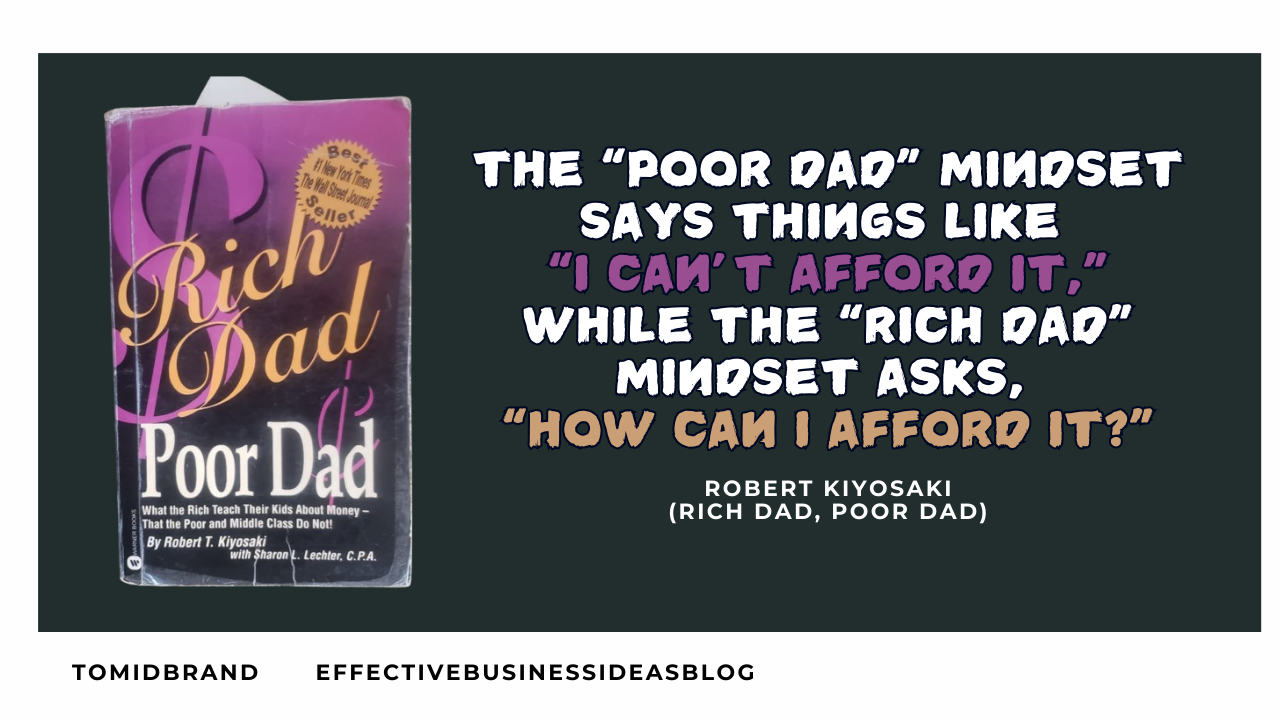
I thought I understood money until I read Rich Dad Poor Dad. This book forced me to confront the difference between “working for money” and “making money work for you.” Robert Kiyosaki tells the story of growing up with two father figures: one highly educated but always broke, and the other, a father who never finished eighth grade but is financially free. The big lesson? Poverty is first a mindset before it shows in your bank account. The “Poor Dad” mindset says things like “I can’t afford it,” while the “Rich Dad” mindset asks, “How can I afford it?”
It provided better insights into how the poor and middle class become trapped in a cycle of jobs, bills, and debt, while the wealthy focus on assets, investments, and financial literacy. After closing the book, I couldn’t imagine being comfortable with the lack anymore.
Schools prepare you to work for others, but rarely teach you to achieve financial independence.
The biggest punch for me was the idea of how school really prepares you to work for others and that made more sense to me, because I am just few days to completing my Master’s project defense and felt like I had spent so much as regards to time, finances and resources on getting this degree, and still wake up clueless on how to be financially free and at least have money consistently coming in for me.
The book explains why simply working harder or chasing promotions will never lead to genuine wealth. Instead, focus on building assets and making money work for you. After reading it, you’ll never see your 9–5 job the same way again. It forces you to think beyond salaries and start aiming for financial freedom.
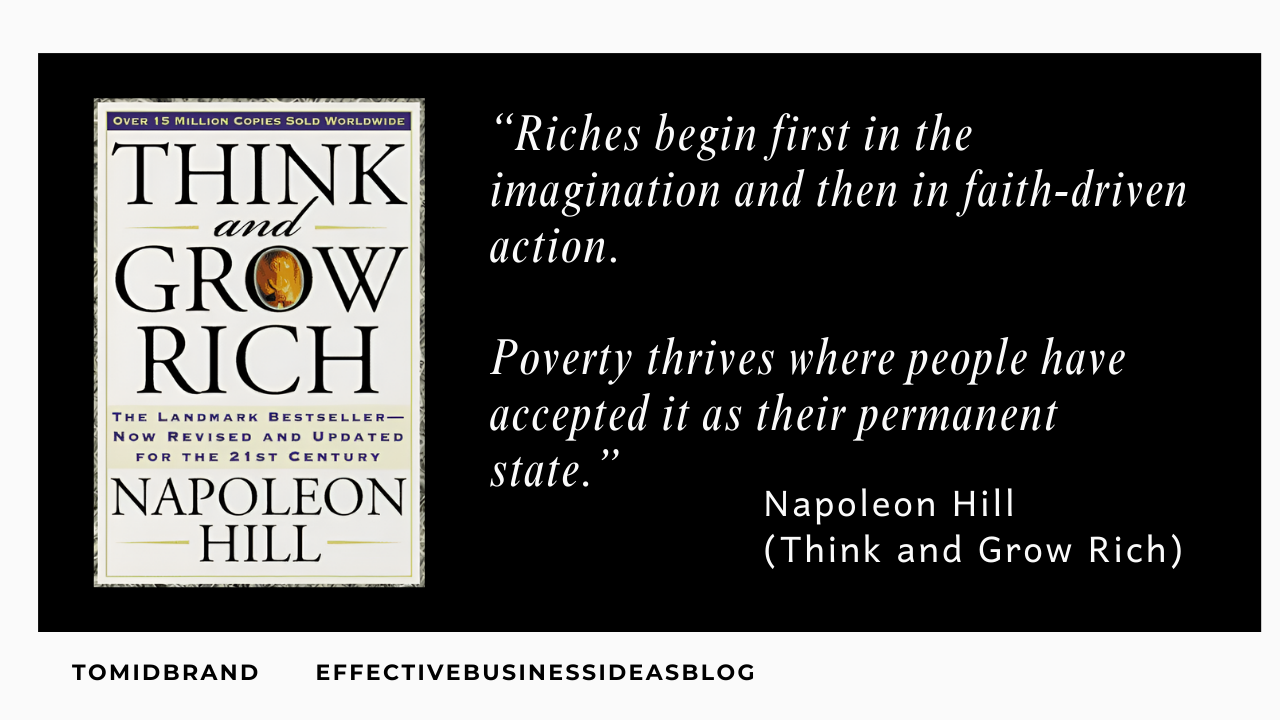
Napoleon Hill’s book forces you to confront what’s really standing between you and wealth: your own mind. The greatest lesson I took from Think and Grow Rich is that riches begin first in the imagination and then in faith-driven action. Poverty thrives where people have accepted it as their permanent state, but wealth begins where people dare to picture more and act like it’s possible.
He breaks down wealth-building into timeless principles, desire, faith, persistence, imagination, decision-making, and the power of the “mastermind.” For me, the most striking part was how he insists that definiteness of purpose separates the rich from the poor. Poor people dabble, the wealthy commit. Poverty is scattered energy. After reading, I couldn’t see poverty as “just the way things are” anymore; I began to see it as a defeated mindset.
Dollar investing means putting money into assets priced and paid in US dollars. These include Eurobonds, USD mutual funds, dollar bank deposits, US stocks, and more. The core idea is simple:
Earn and hold value in a stronger currency while your money works.
The naira’s volatility makes this strategy attractive. In late 2021, the parallel market rate was about ₦565/$1. By 4 November 2022, it was near ₦870/$1, a significant decline in naira value against the dollar. As of August 2025, it trades at around ₦1500/$1. Hedging part of your wealth in USD helps maintain purchasing power. It also grants access to global opportunities with more accurate performance data.
Dollar funds and other USD assets also add diversification. They can provide income, reduce local currency risk, and smooth returns over time.
When managed well, they pair capital preservation with growth.
Whether you live in a buzzing city or a quiet town, one thing is clear: “the cost of living is rising everywhere”. From food to transportation, rent to data subscriptions, it often feels like our money is shrinking while prices keep climbing. And everyone is looking for sustainable ways to beat the high cost of living.
But the good news is that you’re not alone. And even better? There are practical ways to stay afloat, avoid debt, and live wisely without always feeling like you’re chasing survival, and no, it’s not about doubling your income, even though that would be great too. These are not significant, complicated moves. They’re simple strategies anyone can start using, whether you’re a student, employee, or business owner, no matter where you live or how much you earn.
In this post, I’ll show you five powerful, real-world strategies that can help you beat the high cost of living, with examples from real people and ideas you can start applying right now.
1. Shift from “Earning to Spend” to “Earning to Build”
Earning → Saving → Building → THEN Spending
One thing I’ve learned from studying wealthy people is this: wealthy people earn to build, while many others earn just to survive. If your income always goes straight into bills and expenses, and halfway through the month, then you’re not building wealth. You’re recycling your energy, and burnout isn’t far away.
So, how do you switch to the “earn to build” mindset?
Start by assigning a purpose to your income beyond your basic needs. For example:
Build an emergency fund (so you’re not borrowing during a crisis)
Invest in a micro-business (like reselling, digital products, or tutoring)
Save for a professional course (to increase your earning potential)
Automate a small investment plan ($5, $20, or $50 weekly, whatever you can)