Most creators don’t fail because they lack talent; they don’t fail because they don’t have the latest gadgets to produce with. They fail because they spread themselves too thin. Trying to do many things at the same time. One week, they are making business content. Next week, they are posting comedy. Then motivation, finance, worship, lifestyle, and five other ideas at once. In today’s blog, I will show you a straightforward way to build unstoppable momentum as a content creator.
Momentum is difficult to build when your energy is divided. If you want to grow as a content creator, there are four principles that matter more than fancy cameras, expensive courses, or secret algorithms. These four secrets I am about to share with you are just the recipe that have been proven by global creators, and they can change your life in a moment.
1. Pick a Niche, but Don’t Pick What You Merely Like
A common mistake creators make is choosing a niche based solely on passion. Content should solve problems for your audience, even when you are not present. While passion is important, expertise significantly enhances its impact.
The best niche usually sits at the intersection of three things:
What you can talk about for years
What experience, training, or certification do you have
What produces value for other people
You do not need a PhD to teach online. However, if you have spent years studying, practising, working, serving, building, researching, or creating in a field, this experience gives you a significant advantage. Your experience reduces the learning curve for your audience.
As a creator and entrepreneur, Gary Vaynerchuk often emphasises:
“Document, don’t create.”
Meaning: start from what you already know.
Your niche should not feel like acting. It should feel like speaking from accumulated understanding. That is why you must choose a niche where your expertise is recognised and respected, and where you feel free to express yourself.
In our previous blog post, we wrote on one of the most talked-about numbers in entrepreneurship, “WhatIsRevenueinBusiness?” We said that Revenue tells us how much money a business generates from selling its products or services, and for many founders, it’s often the first sign that customers, investors, and even you, as a business owner, are paying attention. But revenue only tells part of the story. Hence, today we are focusing on Profit in business and everything about it.
In fact, one of the biggest mistakes entrepreneurs make is assuming that high revenue automatically means a successful business.
I remember watching an episode of Shark Tank where an entrepreneur proudly announced that his company had generated hundreds of thousands of dollars in sales. The Sharks seemed impressed at first, but within seconds, the conversation shifted.
“What’s your profit margin?” “How much are you actually making?” “How much does it cost you to acquire a customer?” Suddenly, the room became quiet.
The startup’s founders, who were pitching, knew their revenue numbers perfectly, but it was a bit of a struggle to pin down exact figures for what the business was actually keeping after expenses.
And that’s an important lesson. In business, revenue might grab attention, but profit is what determines whether a business survives.
A company can generate millions in sales and still struggle financially. It can have customers, media attention, growing demand, and impressive revenue figures while quietly losing money every month.
History is filled with businesses that looked successful on the surface but eventually collapsed because they failed to turn revenue into profit.
That’s why understanding what profit in business is may be one of the most valuable financial lessons any entrepreneur can learn.
Because at the end of the day, businesses don’t survive on sales alone.
They survive on profit.
So, What Is Profit?
Simply put, profit is the money left after all business expenses have been deducted from revenue.
The formula looks simple: Profit = Revenue − Expenses
But despite how simple that formula appears, many entrepreneurs misunderstand what it means in practice.
Let’s imagine your business generates $20,000 in sales this month.
At first glance, you might feel like you’ve made $20,000. After all, that’s the amount that came into the business.
But then reality kicks in.
You paid suppliers.
You paid employees.
You spent money on marketing.
You paid for software subscriptions.
You covered transportation and operational expenses.
By the time everything is deducted, your numbers may look very different.
For example:
Inventory: $8,000
Salaries: $2,000
Marketing: $1,000
Transportation: $1,500
Software subscriptions: $500
Utilities and operations: $1,000
Total Expenses: $14,000
Actual Profit: $6,000
The business generated $20,000 in revenue but kept only $6,000.
And that difference is exactly why profit matters. Revenue tells you what came in, and Profit tells you what stayed.
In many ways, profit is the business world’s version of a report card. It reveals whether the business is truly creating value or simply moving money around.
This is one reason investors, accountants, lenders, and experienced entrepreneurs pay so much attention to profitability. Revenue may indicate that a company is attracting customers, but profit indicates whether the business model actually works.
As investor Warren Buffett has often demonstrated through his investments, great businesses are not necessarily the ones generating the most revenue. They are often the ones that consistently turn revenue into profit year after year.
The good news is that profit is not just a number you calculate. It’s also a skill you can improve.
Here are three profit-management skills every entrepreneur should learn.
1. Learn How to Control Costs Without Hurting Value
One of the fastest ways to improve your business’s profits is to learn how to manage costs wisely.
Notice I didn’t say “cut every expense.” Because many entrepreneurs hear the phrase “reduce costs” and immediately start removing things their business actually needs. They stop marketing, delay maintenance, reduce product quality, or underinvest in their team.
That often creates bigger problems later.
Instead, smart entrepreneurs focus on controlling unnecessary costs while protecting the things that create value for customers.
In his book Profit First, Mike Michalowicz explains that many businesses don’t have a sales problem; they have an expense problem. Money comes into the business, but poor spending habits prevent owners from seeing meaningful profits.
A simple question every entrepreneur should regularly ask is, “If I removed this expense tomorrow, would my customer notice?” If the answer is no, it may be worth reviewing.
One of the first financial terms every entrepreneur should understand is revenue. If you ask a group of entrepreneurs how their business is doing, and one of the first numbers many will mention is revenue.
“We made $50,000 this month.” “Our sales doubled this year.” “We crossed six figures in revenue.”
One reason I’ve become fascinated by revenue is because of a TV show I enjoy watching called Shark Tank. The show features entrepreneurs pitching their businesses to a panel of investors known as the Sharks, hoping to secure funding and mentorship.
If you’ve ever watched the show, you’ll notice that after founders passionately pitch their products or business ideas, the Sharks quickly shift their attention to the numbers. Questions like “What’s your revenue?”, “What are your profit margins?”“How much did you make last year?” or “What are your sales this month?” often determine whether the conversation moves forward or ends abruptly.
It doesn’t matter how innovative the product sounds; if a founder struggles to explain their numbers clearly, the investors immediately become cautious. That’s because revenue, profit, and other financial metrics help investors assess a business’s health and potential.
Even in the real world, it’s no different. Investors closely track these numbers before investing in a company. Even as a business owner, you celebrate your revenue milestones as signs of progress, and you use revenue to measure growth and customer demand. Simply put, numbers tell a story, and in business, people pay attention to that story.
But despite how often business revenue is discussed, many people still misunderstand what revenue actually means and why it matters. And, understanding what revenue in business really means can help entrepreneurs make better decisions, avoid costly mistakes, and build healthier businesses over the long term.
If social media were accurate, every startup founder would be raising millions and ‘building the future. But the reality of what being a founder looks like in 2026 appears very different, because when you step away from the headlines and talk to some of these business owners, the picture becomes much more complex.
Where, for years, startup culture was dominated by motivational content that made entrepreneurship look like a straight line to success. But in recent years, more founders have begun to speak honestly about the challenges behind the scenes. Conversations about burnout, failed startups, layoffs, pivots, and financial pressure are becoming more open.
Influential startup founders like Jason Fried, co-founder of Basecamp, and Paul Graham have consistently pointed out that the startup journey is far more difficult than it appears online. With their simple message, “building a company takes time, resilience, and a willingness to face uncertainty.”
And the truth is, funding doesn’t guarantee success. Startups like Convoy raised over $1 billion, while Quibi burned through nearly $1.75 billion and still shut down. It’s a reminder that behind the hype, building a startup is often messy, uncertain, and far from straightforward.
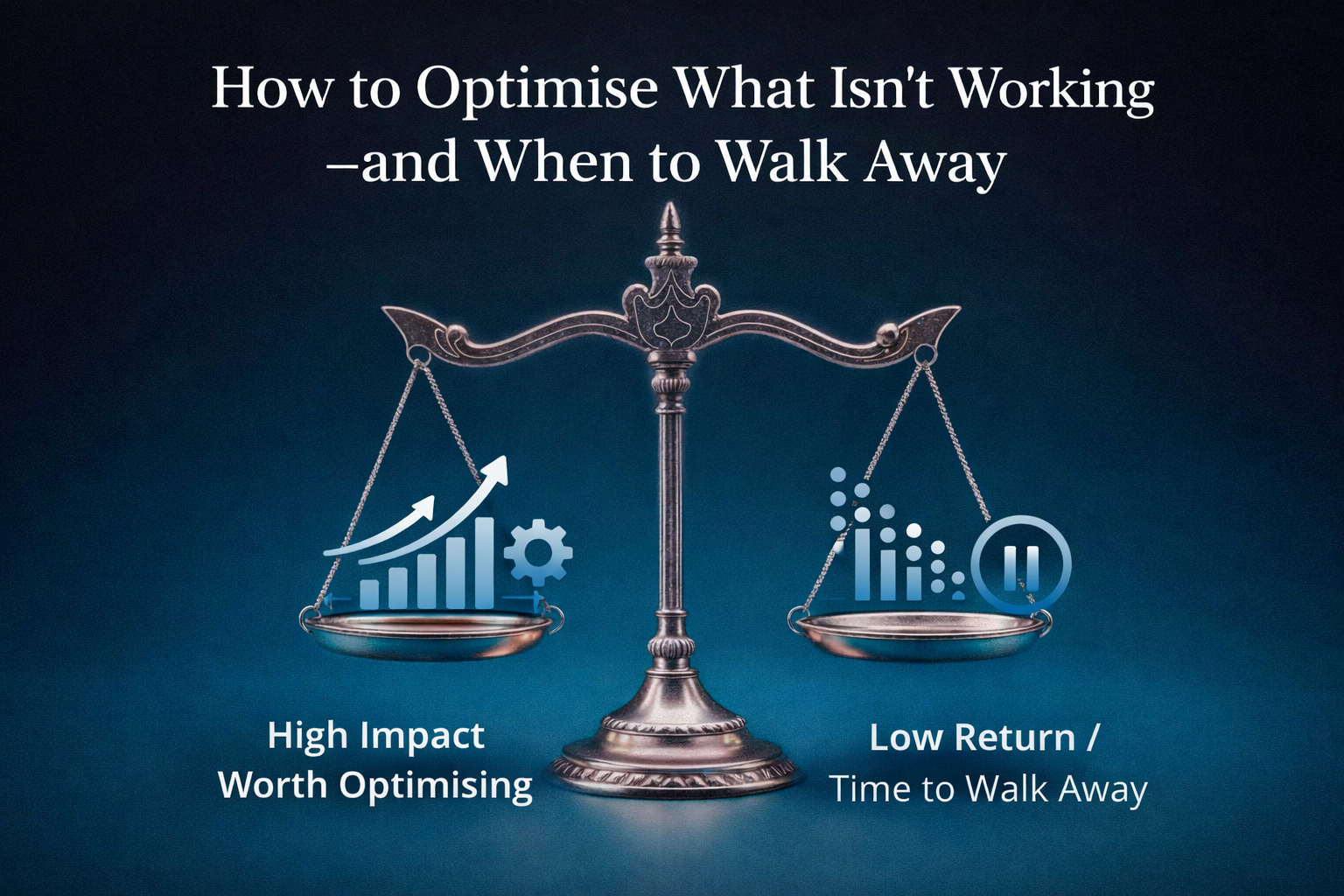
Not everything that isn’t working deserves to be abandoned. And not everything that appears to be providing results should be preserved. One of the most difficult focal selections in 2026 will be determining what needs to be optimised and what needs to be eliminated. Many people either quit too soon or stay too long, both of which stifle advancement. Why? Because focus is more than just persistence; it is also about judgment.
In Part 1 of this series, we established a hard truth: in 2026, focus is no longer optional. With rising noise, shrinking attention spans, and endless opportunities, only those who learn to prioritise what truly matters will experience meaningful progress.
In Part 2, we went a step further. We confronted one of the most dangerous illusions of productivity—effort without results. We saw why tracking outcomes rather than busyness is the new standard and why focus must always be measured by results, not merely by exhaustive labour.
In a previous post, I wrote about why copying business ideas is not always a bad thing and how most successful companies are built on adaptation, not really inventing one new thing that never existed. I promised to do a part two where we discuss “How To Copy Business Ideas The Right Way”.
But first, if you haven’t read part one yet, you should start there first. I was able to draw inspiration from the book “Steal Like An Artist by Austin Kleon, which explained why originality is overrated, clarified what we meant by copying business ideas, and why execution wins. You can read the part one blog post here: “Why Copying Business Ideas Is Not Always a Bad Thing: Tips From Steal Like An Artist.”
Now let’s talk about the more important question.
Because copying alone is not enough. If you copy carelessly, you become invisible, and they can sue you for Plagiarism, stealing another person’s concept down to the least detail. But if you copy strategically, you become competitive.
So, how do you copy business ideas the right way without becoming forgettable? It comes down to these three fundamentals.
1. Change the Context, Not Just the Idea
One of the fastest ways to stand out without inventing anything new is to change the context. That is where you are able to connect the dots of everything you see, read, experience, to what entices you, be it your job, work or business.
Because a business model that works for startups can work differently for freelancers. What works for creators may work differently for nonprofits. What works in Silicon Valley may look completely different in emerging markets.
Same idea. New environment.
This is how many businesses quietly win. They take a proven model and place it in a context the original creator ignored. That context alone creates differentiation.
Take Slack. Workplace communication tools existed long before Slack. Emails, internal messengers, and even Microsoft tools were already in use. Slack did not invent communication. It just changed the context by focusing on startups, remote teams, and fast-moving tech companies that needed simplicity and speed.
Or look at Canva. Graphic design tools existed for decades. Adobe dominated the space. Canva copied the idea of design software but changed the context completely, for non-designers, small businesses, students, and creators. Same idea. New audience. What happened? Massive growth.
You see this today with AI tools. The core technology is similar, but the winners are not general tools. They are niche ones:
AI for writing
AI for images
AI for lawyers
AI for students
AI for marketers
AI for small business owners
Context creates differentiation faster than invention ever will. So, if you want to copy business ideas the right way, ask: Who is this idea working for, and who is being ignored?
2. Improve Clarity Where Others Are Confusing
Imagery from Amazon
A painful truth most people avoid: Many businesses do not fail because the idea is bad. They fail because the message is unclear.
Many businesses lose customers simply because people do not understand:
what they actually do
who it is for
what result to expect
how much it costs
This is where clarity becomes a competitive advantage.
A good example is Stripe. Online payment processing existed before Stripe. PayPal was already big. What Stripe did better was clarity. Developers understood it immediately. Clear documentation, simple pricing, clear outcomes.
Or take Notion. Productivity tools existed everywhere. What Notion improved was clarity of positioning over time, one tool for notes, tasks, databases, and collaboration. It reduced confusion by showing real use cases instead of clever slogans.
This is how to copy business ideas the right way; clarity is not optional. It is leverage.
3. Build Trust Faster Than Your Competitors
People do not buy ideas. They buy confidence.
When two businesses offer similar things, customers choose the one they trust more.
This is why Amazon continues to dominate. They did not invent online shopping. They built trust faster, reliable delivery, clear returns, and a consistent customer experience.
You see the same thing in SaaS companies like Zoom. Video conferencing already existed. What Zoom won on was trust: reliability, simplicity, and consistency. People felt safe using it, especially during critical moments.
Trust is built through:
transparent communication communication
honest onboarding
realistic promises
consistent delivery
This is one of the most underrated growth levers in business.
You can copy the same idea as someone else and still win if people feel safer buying from you. Trust compounds faster than originality.
And this is verifiable. Look at customer reviews, retention rates, and referrals. The businesses that grow sustainably are not always the most innovative, they are the most reliable.
Copying Done Right Is Just Good Business
Copying business ideas is not the shortcut people think it is. Doing it well requires thought, research, and discipline.
Changing context.
Improving clarity.
Building trust faster.
This is how copied ideas become preferred brands.
The market does not reward originality for its own sake. It rewards businesses that work, communicate clearly, and deliver consistently.
And that is why learning how to copy business ideas the right way is one of the most practical business skills you can develop.
Somewhere along the line, the internet convinced people that copying is evil and originality is everything. Now, many smart people are stuck doing nothing, waiting for a “never before seen” business idea that may never come. But copying business ideas is not a bad thing.
Business history agrees with him more than motivation threads do. Most successful businesses today did not invent brand new ideas. They studied what already worked, understood why it worked, and then rebuilt it with better execution, better timing, or clearer positioning. The real problem has never been copying business ideas. The problem is copying blindly.
The Lie We Were Sold About Originality
One of the biggest lies modern entrepreneurship sells is the idea that you must create something completely new to succeed.
It sounds inspiring, but it can also waste time. I bet this was one of the reasons you hesitated to start the business you were inspired to create. You read a book, watched a movie, enjoyed a meal, saw an advertisement, or came across a video, and thought, “Oh, I could actually start my own.” Yet, you found yourself overthinking and researching, going back and forth with the idea. Deep down, something made you feel like you were merely copying someone else. Believe me, this is true.
Original ideas do not automatically create demand. Markets respond to solutions, not creativity alone. That is why many highly original startups fail while “unoriginal” businesses quietly make money.
You can confirm this by reviewing the failed startup lists published each year. One of the most common reasons businesses shut down is no market need. Not a lack of creativity.
Austin Kleon explains that creativity is not pulling ideas out of thin air. It is selective borrowing. You observe what already exists, filter it through your experience, values, and audience, then improve it.
In Part 1, we went through FOCUS as an essential success key in 2026 and how the Eisenhower Principle might help us distinguish between significance and urgency. But it’s only half the job to know what to concentrate on. The true change occurs when we begin assessing result producing tasks rather than how busy we are.
Many individuals are worn out by working a lot yet accomplishing very little in a society where effort is evident, but effect is not always clear. For this reason, tracking results is the genuine measure of focus, which is the new currency.
In this second part of the series, we will examine why the mind shift that will determine your success in 2026 is to focus on Result generating efforts rather than general effort.
Effort is good, but the result is great. That is the phrase that will keep you working in 2026; avoid the trap of ineffective attempts. Many people have grown accustomed to futile attempts to defend their failure to attain their objectives. By discussing their efforts, they make it impossible for them to assess the situation objectively. Every entrepreneur, leader, or individual seeking extreme success must adopt this mindset.
“Effort is good, but the result is great”
Why Effort Is a Poor Metric in 2026
Effort feels wonderful because it’s obvious. You can see yourself working. Others can observe you working. It creates the illusion of momentum. However, hard work alone does not always lead to results.
In 2026, technologies like AI, automation, and other digital leverage will enable ten minutes of focused action to outperform ten hours of fragmented labour. People who understand leverage consistently surpass those who merely understand hard labour. This is why simply assessing effort is problematic. It rewards motion rather than direction. It keeps you occupied without making you productive.
The actual question is no longer, “How hard did I work?”
The question is: “What changed because I worked?”
Results are honest. They reveal what works and doesn’t. They remove emotional attachment to activities and force you to confront reality. When you track results, you start to notice patterns: Which behaviours cause growth?
Results also help you to see which habits contribute to momentum, and which tasks consume time without providing value. Clear feedback improves focus. Instead of guessing, you begin making informed selections. You stop romanticising the effort and start pursuing outcomes. This move alone has the potential to transform productivity, income, creativity, and peace of mind.
In today’s digital age, branding feels like everything. Emerging businesses focus primarily on logos, websites, social media aesthetics, and exposure. Many entrepreneurs think that a loud brand equals success. They assume that attention will eventually turn into money. This belief is harmful. A business owner needs to build their business before building a loud brand. Why?
After seeing numerous business pitches, investor interviews, and founder stories, a pattern emerges. Serious investors do not fall for hype. They ignore dazzling designs that lack performance. They concentrate on numbers, traction, and systems. Simply put, they support enterprises, not appearances. This essay illustrates why establishing your business first is more important than creating a loud brand. It also demonstrates how to do it properly.
What is the Difference Between a Business and a Brand
A business provides value and makes revenue, whereas a brand conveys that value to the market. Many entrepreneurs reverse this sequence, deciding to communicate before creating value. This method can cause problems: a loud brand without a strong business becomes costly to maintain, and marketing activities drain funds without providing significant returns. In contrast, a solid company with a quiet brand can persist, grow steadily, and naturally gain notice. The correct approach is straightforward: create value first, then amplify it later.
Why Investors Care More About Business Fundamentals
Investors have limited time and capital, so they have to minimise risk. This prompts them to ask tough questions; they want to know how your company produces revenue and whether customers are currently engaged. Projections alone do not impress them; they prefer evidence over promises.
A visually appealing brand that produces few results denotes inexperience, but a clear business with great KPIs demonstrates discipline. Because of this, fundamentals always take primacy.
If Day 1 reminded us that stability is no longer a place but a skill, then Day 2 pushes us to face something even more uncomfortable: in 2025, attention became the most valuable currency in the world. The attention economy in 2025 quietly revealed what truly worked, what failed, and why some people moved ahead while others struggled, despite working just as hard.
What shaped growth, visibility, income, and opportunity in 2025 was who understood attention and who didn’t.
This is Day 2 of our 12 Days of Christmas series, where we slow down to examine what really happened this year across business, tech, media, creators, and culture so we can enter 2026 with clarity, not confusion.
If you missed Day 1, we explored how stability completely changed form in 2025. You can catch up via the link before continuing, because today’s lesson builds directly on it.
1. In 2025, Attention Became More Valuable Than the Product Itself
One of the biggest lessons from the attention economy in 2025 is that attention stopped being a by-product of success and became its source.
Across the year, reports showed that creators and digital platforms were pulling advertising revenue that rivalled, and in some cases surpassed, traditional media companies.
Brands began chasing creators. Investors began following audiences, not just ideas. Platforms began prioritising time spent, not just clicks.
YouTube is a good example of this shift. Under CEO Neal Mohan’s leadership, the platform didn’t just chase virality. With over 2 billion logged-in monthly users globally, for instance, YouTube was able to double down on tools that help creators keep attention longer. Like:
Shorts helped creators get discovered.
Long-form content got more memberships.
And community tools helped people stay relevant and monetised.
That balance is why it remained one of the strongest monetisation platforms throughout 2025.
In 2025, people didn’t always win because they were objectively better. They won because they consistently held attention. For instance, the Stanley Cup suddenly became a hot product this year because TikTok made it controversial.