Category: business ideas Page 3 of 17

Online Business Ideas That Actually Work in 2026: With Proofs

What separates online business ideas that work in 2026 from noise is not motivation, trends, or the fact that someone told you to try it. It’s proof. Proof of where money is actually flowing, where platforms are investing, and how real people are structuring income in ways that last.

As Seth Godin once said, “The best way to thrive is to make something people want, in a place they are already paying attention.” That idea matters more than ever now. The internet is crowded, attention is expensive, and not every online business idea deserves your time.

This blog post breaks down online business ideas that work in 2026, not based on hype, but on evidence. We look at why these models continue to grow, who they work for, and how people are turning them into profitable income streams and long-term careers, not just side hustles.

1. Service-Based Online Businesses (The Fastest to Start)

Service-based online businesses remain one of the most reliable ways to make money in 2026. Why? Because businesses would rather pay for solutions than experiment with them, another issue is that business costs are up, and hiring full-time staff is expensive, especially when they don’t need the service every time.

According to multiple global workforce reports, companies increasingly prefer, examples:

  • Social media management
  • SEO and content strategy
  • Email marketing
  • Website setup and optimisation
  • Ads management
  • Virtual assistance with specialised skills

These businesses work because they solve immediate problems, and you are not trying to convince them to buy something new. You are just offering help that they already need.

This is why service businesses consistently outperform product-only businesses online. You’re not waiting for traffic or hoping for sales. You are exchanging value for money directly. Platforms like Upwork, Fiverr Pro, Toptal, and LinkedIn Services continue to grow because businesses prefer paying for results over salaries.

2. Education-Based Online Businesses

One of the fastest-growing online business models in 2026 is education, and not the traditional kind. People are looking for ways to acquire more knowledge; they are searching online for practical knowledge that helps them move forward now.

  • Career transitions
  • Freelancing skills
  • Business knowledge
  • Technical skills
  • Personal development tied to income

Every day, millions of searches are being made around:

  • career transitions and remote work
  • freelancing and digital skills
  • business growth and income strategies
  • technical and product skills
  • personal development tied directly to earning more

This demand has created a massive opportunity for education-based online businesses. And the interesting part is that the most successful ones are not always built by professors or industry “gurus.” They are built by people who have done the work and can explain it clearly.

Education-based online businesses in 2026 include:

  • online courses and short programs
  • live workshops and cohort-based learning
  • one-on-one coaching or mentorship
  • digital guides, templates, and playbooks

What works here is experience, not perfection. People trust creators who are one or two steps ahead of them, not just those with impressive titles. Platforms like Gumroad, Kajabi, Teachable, and Notion have made it easier than ever for individuals to package their knowledge and sell it directly to their audience.

In fact, many creators openly share that their first profitable digital product didn’t come from years of teaching; it came from solving a problem for themselves and then showing others how to do it faster. That pattern keeps repeating because the market rewards clarity, speed, and relevance, not just information.

If you’ve learned something practical, something that saved you time, helped you earn more, or helped you avoid mistakes, education becomes a very real online business in 2026. You don’t need to know everything. You just need to teach what you already understand well enough to guide someone else.

3. Freelancing Built Around High-Income Skills

Freelancing in 2026 is no longer about offering “writing”, “design”, or “marketing” in general terms. Clients are not paying for titles anymore, they are paying for outcomes.

No one hires a freelancer simply because they are a writer. For instance, a client hires a UX writer to improve onboarding conversions, a content strategist to increase organic traffic, or an email copywriter to help sell more products. The clearer the outcome you sell, the easier it is for clients to say yes.

This shift is already backed by data. According to recent Upwork and Fiverr marketplace reports, freelancers who position themselves around specialised, high-income skills earn significantly more than generalists offering broad services. Other roles could be:

  • SEO content writing (traffic + revenue focused)
  • Conversion copywriting (sales-focused)
  • UX writing
  • Technical writing
  • Product design
  • No-code development 
  • Technical and SaaS documentation
  • Data analysis and automation.

What’s happening is simple: businesses want fewer freelancers, but better ones. Instead of hiring “a writer,” they are looking for someone who understands their product, their users, and their revenue goals. That is why freelancers who narrow their positioning, even if they do less overall work, are often earning more.

If you are freelancing in 2026 and still selling a generic service, you are competing on price. But when you build your freelance career around a specific, in-demand skill with clear business impact, you are competing on value, and value is what gets paid.

Millions Search YouTube, Amazon, Facebook, Google & ChatGPT: What It Means for Creators.

Each day, millions of people go to Google and type in just one word: YouTube, Amazon, Facebook, Gmail, Wordle, or ChatGPT. These searches are not questions or random. They are done on purpose.

In this blog post, I’ll explain what navigational searches are, why these platforms get so many searches, and what this shows about how people use the internet now. If you’re a writer, creator, entrepreneur, or digital leader, knowing this can help you put your content where people are already looking.

What Does “Navigational Search” Mean?

A navigational search is when someone already knows where they want to go and uses a search engine to reach that site more quickly.

Examples:

  • For example, typing ‘YouTube’ to go to youtube.com.
  • Or typing ‘Amazon’ when you want to shop online.
  • Or typing ‘Gmail’ to check your email.

The goal here isn’t to learn anything new, but simply to access a specific site.

Why Navigational Searches Matter

Navigational searches reveal the following trends:

  • Platforms are becoming dominant in their fields.
  • People are placing more trust in certain brands.
  • Users are forming habits around these platforms.
  • There is a growing dependency on digital ecosystems.

When millions of people keep searching for the same platform by name, it shows that the platform is now seen as a utility rather than just a regular website.

Let’s get to see the platforms with Crazy Numbers

1. YouTube: 185 Million Navigational Searches in Jan 2026 

6 Writing Platforms That Still Pay $100+ Per Article in 2026 (No Client Hunting)

Most people assume online writing only pays in exposure, likes, or small change. For years, many writers publish article after article for free, hoping that someday it will lead to money, clients, or recognition. The truth is simpler and more uncomfortable: many writers stay unpaid because they don’t know where to publish. But not anymore. With this guide, you will learn the writing platforms that pay in 2026.

There are platforms that already value good writing. Platforms where you don’t need to chase clients, negotiate endlessly, or prove yourself on social media first. You show up, submit strong work, and get paid per article.

So, if you’re looking for writing platforms that pay per article in 2026, realistically, not magically, this list will point you in the right direction. These are places where one well-crafted piece can earn $100 or more, without needing years of experience or a massive audience.

1. Better Marketing 

Better Marketing is one of the strongest examples of how writing tied to business value is well paid in 2026. The platform focuses on marketing strategy, branding, audience growth, content creation, and the creator economy. This is not a place for vague motivation or surface-level tips. Articles here break down how brands grow, why campaigns succeed or fail, and how creators and businesses can position themselves better in competitive markets.

The reason Better Marketing pays writers well is simple: marketing content attracts decision makers. Founders, marketers, consultants, and business owners actively read this publication, and that audience directly converts into paid Medium subscriptions, tools, and services. Because of that, writers who publish strong, practical pieces often earn well over $100 per article through Medium Partner earnings, with some pieces generating much more over time.

Acquire These Top 15 In-Demand Skills and Increase Your Income in 2026

Happy New Year! If you’re reading this in early 2026, chances are you’ve already written down your goals, but somewhere deep in your mind is running questions like: How do I Tick out All My Goals? Will I earn more, or stay stuck doing the same thing? What are the in-demand skills in 2026?

Every year, people set resolutions. But 2026 feels different. The world is moving faster. Jobs are changing more quickly. Technology is reshaping entire industries in real time. Data from the World Economic Forum’s Future of Jobs Report suggests that nearly 50% of all employees will need reskilling due to automation and digital transformation. In simple terms, the skills that paid your bills two years ago may not be the ones that pay in 2026.

So instead of guessing, waiting, or copying generic advice, let’s talk honestly about in-demand skills in 2026 that can actually increase your income, improve your employability, and prepare you for the future of work.

The skills in this guide are not trends. They are skills people are currently being paid for across the US, UK, Europe, Africa, Asia, and almost everywhere in the world. Although I did not rank them from top to bottom, because each one is valuable depending on where you are and what problems you want to solve.

1. AI Prompt Engineering and AI Workflow Strategy

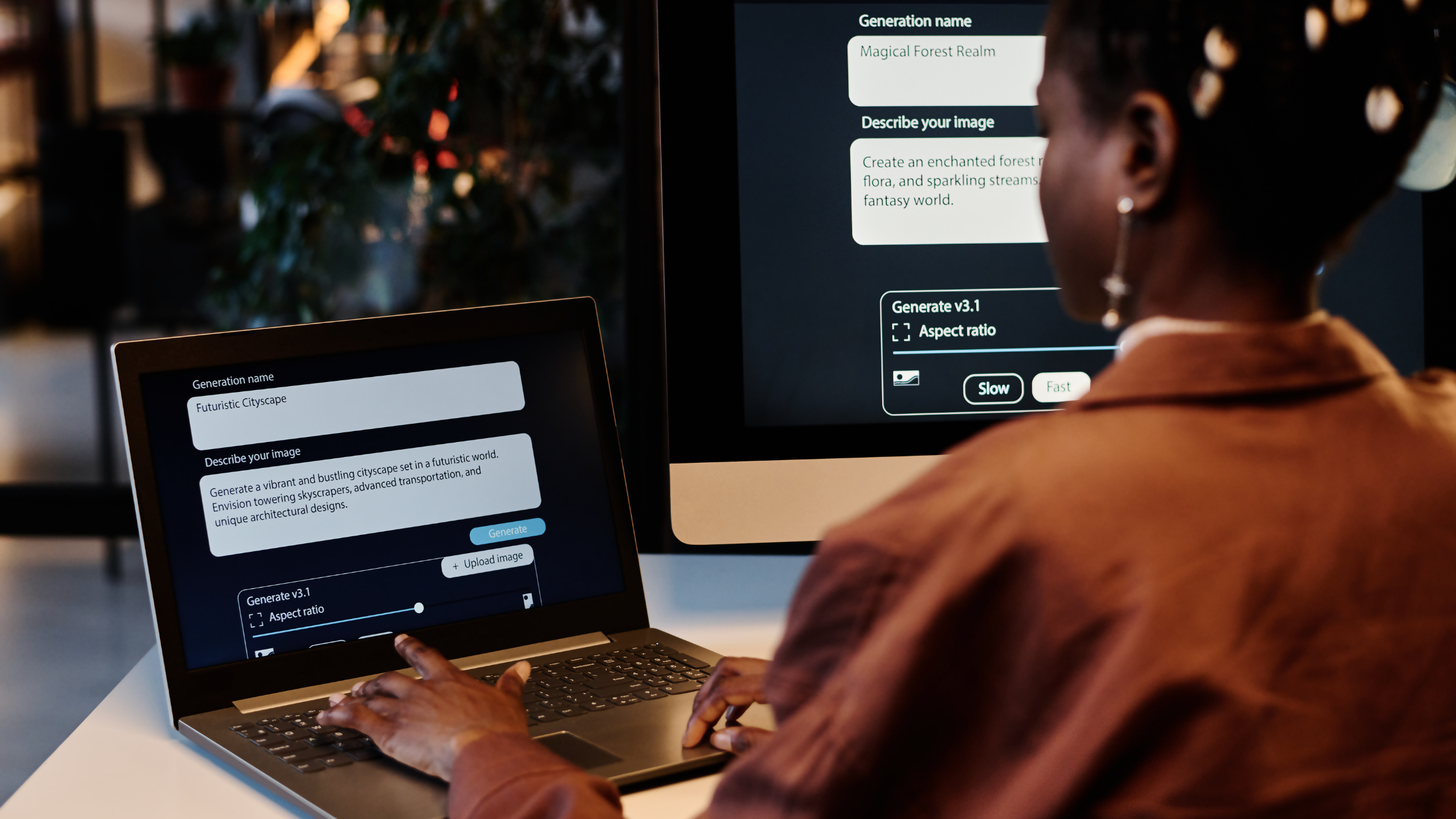
A Lady Looking into her laptop while doing an AI prompting role... one of the top in-demand skills in 2026

Imagery from Canva Pro!

One of the fastest-rising in-demand skills in 2026 is not just “using AI,” but knowing how to use it well. Even Coursera’s Global Skills Report found that the demand for AI-related skills grew by over 800% in 2025 alone, making it one of the fastest-growing skill categories worldwide. The conversation has shifted. Companies are no longer asking, “What is AI?” They are asking, “Who can help us use AI profitably?”

What it is

AI prompt engineering and workflow strategy involve effectively communicating with AI tools and integrating them into real business processes. This goes far beyond typing random prompts. It’s about designing systems that save time, reduce costs, and improve output.

Over the past two years, tools like ChatGPT, Claude, Notion AI, Midjourney, and Copilot have exploded in popularity. But here’s the gap most companies are facing: many teams have access to these tools, yet very few know how to use them strategically.

Saturated or Unsaturated Markets: Which Offers Better Chances of Wealth?

People love to say, “Don’t enter a saturated market, there’s too much competition.” It sounds smart, but is it really accurate? Because when you look at the world today, the most saturated products we know, water, soap, bread, phone data, and food delivery, are still minting fresh millionaires every single day. What a good way to start the discussion on saturated markets vs. unsaturated markets. You are in for an exciting read, dear reader. 

In fact, the honest debate about saturated markets vs unsaturated markets should not be about which one is “better,” but which one gives YOU the highest chance of making money at the stage of life and business you are in right now.

If 2025 has shown us anything, it’s this: Some entrepreneurs became wealthy very fast by joining industries where thousands already exist, while others quietly built completely new categories and became pioneers. Both sides are winning. They’re just winning for different reasons.

So, let’s break down the truth with research and examples you know.

What Are Saturated vs Unsaturated Markets?

A saturated market is a business area with many sellers, fierce competition, and customers who are already spending money daily. A market like: Fashion accessories on Instagram, food businesses, beauty & skincare brands everywhere, smartphone repairs, a popular business on every street corner you pass through. The beautiful thing about this market is that the money is already flowing.

An unsaturated market has few players, unclear or growing demand, and customers who are still learning what they truly need. Think AI tools for small businesses, robotics in agriculture, drone delivery in hard-to-reach communities, solar payment innovations, opportunity is fresh, and expectations are flexible.      

But here’s the absolute truth about saturated markets vs unsaturated markets: 

The Case for Saturated Markets: Fast Money, If You Can Stand Out

Saturated markets are crowded because demand is predictable. For instance, people already want what you are selling. You don’t need to convince anyone that they need a new dress, better-tasting food, cheaper smartphone accessories, or a more fun café experience. They are already searching for it daily.

Why do saturated markets still produce wealthy entrepreneurs?

  • People are already buying. You show up to sell.
  • Competitor data already exists. You can copy what works and improve on it.
  • Customers already understand the product. No long education phase.
  • You can more easily predict revenue, pricing, and costs.

Research from Global Entrepreneurship Monitor reveals that 70% of profitable startups enter markets where demand is already established, not brand-new ones.

A saturated market can make you wealthy much faster if your offer stands out.

Crowded space doesn’t kill opportunity. Not been able to stand out actually does. Someone else may be cheaper. Another might offer free delivery. Another gives “Buy 1 Get 1 Free.” So you can’t just join the competition; you must change the rules slightly enough to be irresistible.

Examples we all know:                             

Brand. Market Status. Why They  Won 

  • Starbucks. Coffee (super saturated). Brand story and lifestyle experience
  • Tecno & Infinix. Smartphones in Africa. Affordable pricing  and battery life 
  • Canva. Design tools everywhere. Easy to use for beginners

You will notice that Starbucks didn’t invent coffee. Tecno didn’t invent phones. Also, Canva didn’t invent design tools. They all improved something people already loved and made an irresistible offer to meet market demand.

So, if you want cash flow quickly? Saturated markets will give you:

Does Writing Really Pay? 4 Truths I Discovered That Will Change How You Think About Money

Writing paid my bills. Not overnight, not by accident, but by intention and systems. If you’ve ever wondered, ”Does writing really pay?”, the short answer is: yes, but not in the way many expect. 

Writing is more than putting words together. It’s a way of thinking clearly, solving problems, influencing decisions, and packaging ideas into products that people are willing to pay for. 

In this blog post, I will be sharing my own truths on this question, and if you can truly read it through, you can actually make very good money off your writing skills. 

Below are four truths I learned that changed my income and how I treat writing as work.

Truth 1: Writing Turns Ideas Into Income by Forcing Clarity

Before writing anything, an idea feels perfect in your head. But the moment you start typing, researching, you begin to see the gaps.

  • Who is this for?
  • What problem does it solve?
  • Is it useful?
  • Why should anyone care?

Writing forces you to answer these questions, test an idea end-to-end, from headline to solution, and that process exposes what’s sellable, be it a new product, course, or service idea.

7 Digital Mobile Business Ideas to Cash Out From in 2026

If 2025 proved anything, it’s that you don’t need an office to run a global business. From Africa to the UK to the U.S., and literally anywhere in the world, young entrepreneurs are using their phones to run profitable digital mobile businesses, from content creation to online tutoring and dropshipping.

According to Statista, the number of mobile internet users worldwide has now exceeded 5.5 billion, and over 70% of e-commerce transactions in developing regions happen on mobile devices. That means the world of business is literally in your pocket,  and 2026 is shaping up to be the year when flexibility meets profitability.

Whether you’re a student, a stay-at-home parent, or a full-time creative, these digital mobile businesses can help you earn, grow, and expand, all from your phone or laptop.

The Simple Maths of Financial Leveraging: Ratios, Measures, and the Analysis.


Part 2: Ratios, Measures, and the Math Behind Financial Leverage

Understanding the Numbers Behind Financial Leverage

In Part 1, we explored what financial leverage means and why it’s essential for business growth. In this part, we’ll go deeper into the numbers.

Financial leverage refers to the extent to which a company uses debt to fund its operations and investments. To manage debt wisely, business owners and investors should understand the key ratios that measure it.

These financial leverage ratios act as your dashboard indicators. They show how much risk your company is carrying, how efficiently it’s using borrowed money, and how sustainable your growth plan is.

Let’s break them down.

1. Debt-to-Equity (D/E) Ratio

This is the most popular measure of leverage. It compares the amount a company owes to the amount it owns.

D/E = Total debt/Total Equity

  • Total Debt includes all short-term and long-term borrowings.
  • Total Equity refers to shareholders’ funds, including invested capital and retained earnings.

A higher D/E ratio indicates that the company relies more on borrowed funds. A lower ratio shows the company depends more on its own funds.

For example, if your business has $5 million in debt and $10 million in equity, your D/E ratio is 0.5. This means that for every $1 of equity, you have $0.50 in debt — a healthy balance for most industries.

However, if your debt jumps to $15 million while equity remains $10 million, your D/E ratio becomes 1.5. Now, for every $1 of equity, you owe $1.50, a sign of higher risk.

Tip: Manufacturing and capital-intensive firms often have higher D/E ratios than service-based companies. Always compare within your industry.

Why Now is the Most Profitable Time To be a Writer (Even New Writers)

If you want to become a writer, now is the best time to start. Unlike in 1998 when newspapers hired many writers, 2010 when blogging was popular, or even 2016 when poetry was the order of the day on Instagram, 2025 offers the best opportunities. This is a profitable time to be a writer and earn money.

Why is now the best time?

Writing has changed. It is no longer just a skill; it is a valuable tool. Today, writing can be a product, a service, a brand, a business, or a way to grow an audience without showing your face. The good news is that getting started is easier than ever.

All you need is to understand what type of writer you want to be and how your work can make money.

Why is Now the Most Profitable Time To Be a Writer? And how can you take advantage of these opportunities?. All will be adequately discussed in this blog post. 

1. Writing Has More Income Streams Than Ever Before

Before now, a writer had two options: publish a book or get hired by a newspaper. Today, anybody can make money even without being famous, simply by placing their writing strategically. 

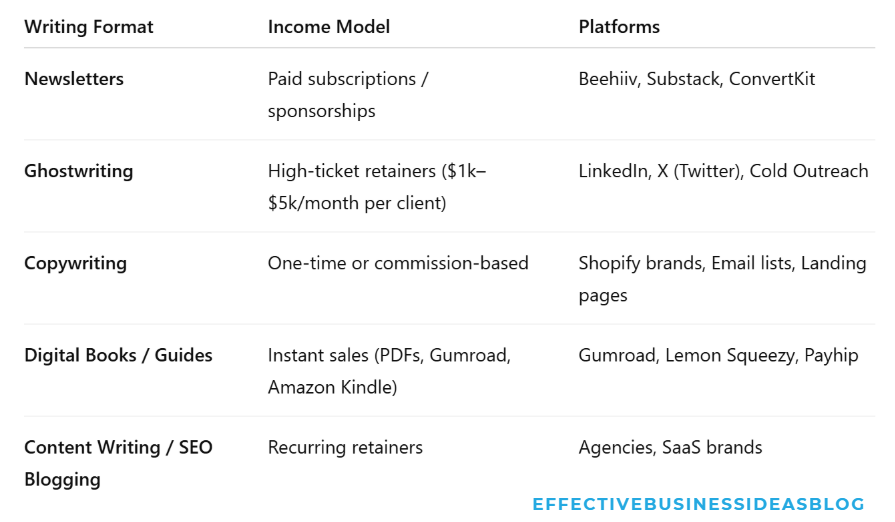
See the various ways writers are earning in 2025:

According to ConvertKit’s 2024 Creator Report, writers earning over $100k/year increased by 43% in just one year. And guess what? Most of them don’t even have “bestselling author” attached to their bio.

The gap is no longer between published and unpublished writers, it’s between visible and invisible writers. For instance, there is a YouTube channel that makes videos about Software engineering and interviews about tech and startups. It has 146k subscribers on YouTube, and its Substack newsletter, “The Pragmatic Engineer,” is crossing $1M per year as a one-person media brand. 

This just attests to the point that nobody needs permission anymore. All you need is distribution, and for the first time in history, platforms are rewarding writing by including algorithmic reach and direct monetisation.

2. AI Isn’t Replacing Writers (It’s Making the Smart Ones Richer)

Let’s settle this: Artificial intelligence tools aren’t here to replace writers, they’re here to replace slow writers.

People who treat AI like a cheat code instead of a competitor are producing five times more work in half the time, which means they earn faster, pitch faster, publish more, and get seen more. Before now, writing one blog post could take a whole afternoon. Today? You can outline in Notion AI, draft in ChatGPT, refine with GrammarlyGO, and schedule with Typefully, all in under an hour.

That doesn’t make writing less valuable, it makes your time more useful. Even bestselling author Morgan Housel put it best in an interview: “AI won’t kill original thinking. It’ll kill lazy phrasing.”

So instead of asking, “Will AI replace writers?”
The real question is: Will you be the writer who uses AI to write 10x more… or the one who gets left behind because you’re still typing like it’s 2012?

If you are ready to build a profitable business or career as a writer, using AI tools and resources, now is the perfect time to multiply your earnings. 

Six Steps to Start a Smart Subscription Business without Coding

Subscription-based businesses can be highly lucrative when executed well. They provide a predictable income, which, when nurtured properly, can produce a consistent flow of revenue for your business, whether small in scale or large. According to a report from Grand View Research, the global subscription economy is estimated to reach as much as 1.5 trillion by the year 2033.

Image Screenshot Link

This is not just a simple proposal, considering the analytical report from Quick Market Pitch, which reveals that the subscription market grew by over 15% in 2024. Over the last ten years, organisations using subscription models have increased by 435%. The issue, however, is that when many people think of Subscription businesses, they start thinking they need a software engineer to write code and a line of software code in order to get to that point where they can begin running one effectively. However, in today’s effective business blog post, I will walk you through six steps that you can take to easily start a subscription business without breaking the bank. 

STEP 1: PICK YOUR AREA OF FOCUS

The first step is to start with your strength, a blend of something you are very skilled at and what is potentially affordable. Don’t pick something that requires a lot of complexity to offer. Complexity is often the undoing of many ideas – it’s too complex to get started with.

Decide what you’ll offer on a subscription basis. This can include digital products like e-books, courses, stock photos, templates, and newsletters. You might also provide services such as consulting hours, coaching sessions, or fitness programs.

Physical products like subscription boxes with books, snacks, or skincare items are also an option. Additionally, you could offer content or community access, such as private communities, exclusive videos, or premium podcasts. The key is to think about providing recurring value, something people need or enjoy regularly.

Page 3 of 17

Theme by Anders Norén & Customized by Karol K