Author: iamTomithebrand Page 1 of 18

Business Ideas Hiding Inside the Education Industry: 20 Opportunities to Explore

Most of the time, we see education as something that happens inside a classroom. A teacher teaches, a student learns, a school collects fees, and everybody goes home. But recently, there have been tons of profitable business ideas in the education industry that you might not even think of. 

Educational products, services, technology, content, logistics, training and information. Someone has to create textbooks, design worksheets, train teachers, build the software schools use to record attendance, help parents understand what their children should be learning, create educational games, and produce revision materials.

And that is where some of the most interesting business ideas in the education industry are hiding.

The beautiful thing is that you do not necessarily need to open a school to build an education business. You may not even need to be a teacher.  Skill-based learning is one of the fastest routes to financial stability. 

1. Create learning products instead of teaching

One of the easiest mistakes to make when stepping into the education sector is assuming you have to sell your time. You don’t. Instead of trading hours for dollars in a traditional classroom, you can create a digital or physical asset once and sell it repeatedly. Think about printable worksheets, flashcards, phonics packs, revision guides, activity books, and classroom games.

While a teacher might spend hours creating a single revision worksheet for 30 students, a product-focused business can turn that exact need into a professionally designed resource that thousands of teachers or parents can purchase globally. The best part? The product doesn’t need to be complex or overly sophisticated. A beautifully designed multiplication game for children struggling with times tables, or a literacy card game for early readers, solves an existing learning problem without requiring a revolutionary invention. 

If you want to see how creators do this successfully, take a look at marketplaces like Teachers Pay Teachers or explore digital storefront guides on platforms like Etsy Creator Hub to see what top sellers are offering. 

2. Build an education business around parents

Parents aren’t just paying school fees; they are buying peace of mind. Behind every student is a parent wondering if their child is actually learning, why they are struggling with math, how to help with reading at home, or how to prepare for upcoming examinations. This deep emotional and logistical investment creates major opportunities for businesses that educate and support the people around the learner.

You could start a practical parent newsletter, run weekend workshops, sell home-learning kits, or offer specialised consulting. Imagine a boutique service that helps parents map out a step-by-step game plan for a child falling behind in reading. The product isn’t tutoring; it’s a clear roadmap for the parent. You can  how to market directly to family niches with  resources like the HubSpot Marketing Blog on building community-driven newsletters. 

3. Sell teacher resources

Teachers carry a massive workload entirely outside of teaching. Lesson planning, grading, managing the classroom, and putting together materials eat up hours of their personal time. That time crunch makes teacher-focused products a very profitable market.

Examples include:

  • lesson-plan templates
  • assessment templates
  • classroom management tools
  • teacher planners
  • digital gradebooks
  • educational presentation templates
  • classroom decoration kits
  • teaching aids
  • professional development courses
  • teacher communities

A busy teacher won’t have time to design 50 engaging worksheets from scratch, but if you do it for them and sell it online, you’ve solved a major problem.

4. Build a business around tutoring without becoming the tutor

Tutoring is one of the most obvious education businesses, but it comes with a hard ceiling: your own time is limited. A more scalable, profitable route is to build a marketplace instead of teaching yourself.

Instead of tutoring math students personally, you create a platform that connects parents with vetted, trusted mathematics tutors. Your job becomes handling the marketing, scheduling, payments, and quality control.

This model can work for languages, music, coding, exam preparation and university subjects. The person who owns the marketplace doesn’t necessarily have to deliver the service. You own the infrastructure, and other people deliver the service. For inspiration on structuring digital learning modules, check out open course libraries like Khan Academy to see how complex subjects are broken down into bite-sized practice units. 
How to Build a Startup in 2026: 6 Lessons Every Founder Should Know

How to Build a Startup in 2026

Every year, thousands of founders launch startups believing that a great idea is all they need, even the news of how much startups founders are raising is always shocking and people often wonder how to build a Startup in 2026? Yet research consistently shows that most startups don’t fail because founders lack passion. 

Over the past few weeks, I’ve found myself spending a lot of time studying successful startup founders and how to build a Startup in 2026. After writing about the business lessons from Iyinoluwa Aboyeji, co-founder of Andela and Flutterwave, I kept noticing the same patterns. The six lessons below appeared repeatedly, whether I was reading about Airbnb, Canva, Stripe, Andela, or listening to startup investors explain why they back one company instead of another. 

If you’re wondering how to build a startup in 2026, the first thing you need to understand is this: not every new business is a startup.

A startup is built for rapid growth. Paul Graham, co-founder of Y Combinator, famously described a startup as “a company designed to grow fast.” Growth isn’t just something that happens later; it’s built into the company’s vision from the very beginning.

Whether you’re developing a technology platform, launching an online marketplace, building a fintech company, or creating a new software product, the principles are the same. Before you think about funding, marketing, or scaling, you need to understand what makes a startup capable of growing quickly.

If you’re serious about learning how to build a startup in 2026, these are the principles worth paying attention to. 

Table of Contents

  • What Makes a Startup Different From a Small Business?
  • Lesson 1: Solve a Problem Worth Paying For
  • Lesson 2: Build for Scale from Day One
  • Lesson 3: Stop Building AI Products Nobody Needs
  • Lesson 4: Build a Team That Can Grow Without You
  • Lesson 5: Your First Customers Matter More Than Investors
  • Lesson 6: Never Stop Learning
  • Frequently Asked Questions

1. How to Build a Startup in 2026 Starts with Solving the Right Problem

Imagery from Canva geralt 

If there’s one lesson every aspiring founder should understand before building a startup in 2026, it’s this “great startups don’t begin with products, they begin with identifying problems.”

One of the biggest misconceptions about startups is that all you need is a brilliant idea. In reality, investors, accelerators, and successful founders rarely get excited about ideas alone. They’re interested in businesses that solve meaningful problems for a large number of people.

Paul Graham, co-founder of Y Combinator, famously summed it up in just four words: “Make something people want.” It sounds simple, but those four words have shaped thousands of successful startups around the world.

As I was writing my previous article on the business lessons from Iyinoluwa Aboyeji, one thing became obvious. Whether you’re looking at Flutterwave, Andela, Airbnb, Canva, or Stripe, these companies didn’t become successful because they had clever ideas. They succeeded because they identified problems that millions of people were already experiencing.

Before you think about building an app or designing a product, ask yourself a few important questions.

  • What problem am I solving?
  • Who experiences this problem?
  • How are they solving it today?
  • Why would they choose my solution instead?

These questions may seem basic, but they form the foundation of every successful startup. A framework could look like this  Problem to Solution and Strategy.

First, clearly define the problem and understand who is affected by it. Then explain how your solution improves on what’s already available. Finally, think about your strategy. 

  • How will customers discover your product? 
  • What makes your solution different? 
  • Why should they trust you?

The truth is, a startup without demand is simply a project. That’s why successful founders spend time talking to potential customers before spending months building products. They validate demand, collect feedback, and improve their ideas based on real conversations rather than assumptions.

8 Powerful Business Lessons from Iyinoluwa Aboyeji

When people talk about African entrepreneurship, names like Aliko Dangote and Tony Elumelu often dominate the conversation. However, as a young person, one would also love to hear some of the most valuable business lessons from Iyinoluwa Aboyeji, which may be just as important for today’s entrepreneurs. 

Over the past decade, Aboyeji has quietly helped change how the world views African innovation, becoming one of the most influential startup founders on the continent. 

Before the age of 30, he had already co-founded Andela and Flutterwave, two startups that later achieved unicorn status, a term used for privately held companies valued at more than $1 billion. Today, through Future Africa, he continues to invest in and mentor founders building the next generation of African businesses.

Recently, while watching his interview on The School of Hard Knocks, one thing stood out.

He didn’t spend time talking about becoming rich or about himself or his worth. Instead, he spoke about systems.

  • People.
  • Trust.
  • Service.
  • Long-term thinking.

The more I listened, the more I realised these weren’t just lessons for startup founders looking to build unicorns. They’re lessons every entrepreneur can apply, whether you own a restaurant, run a fashion brand, manage a farm, freelance online, or are building your first business.

So, I did my diligent research, read articles, books, and almost everything I could learn and hear from him too. Below are the biggest business lessons I believe every entrepreneur can learn from Iyinoluwa Aboyeji.

1. Solve Big Problems, Not Small Opportunities

One thing I admire about Iyinoluwa Aboyeji is that he never talks about building unicorns as though that should be the goal.

In several interviews, he has said entrepreneurs should focus on building great businesses and solving real problems. The valuation comes later.

That mindset helps explain the success of companies like Andela and Flutterwave. Andela addressed the challenge of connecting African software talent with global opportunities, while Flutterwave simplified payments across Africa. Both companies focused on problems affecting millions of people.

Many entrepreneurs start with the question “What business can make me money?”

But successful founders often ask “What problem needs solving?” The difference may seem small, but it changes everything.

If you’re still searching for a profitable business idea, you may enjoy our guide How to Validate a Business Idea Before Investing Your Money. 

2. Businesses Scale Through Systems, Not Hustle

One of the most interesting moments from the interview came when Iyinoluwa Aboyeji was asked about the secret to building billion-dollar companies.

Many people expect successful founders to talk about working longer hours, sacrificing sleep, or grinding harder than everyone else.

Instead, he pointed to something much more important: “Systems.” This stood out because we live in a culture that glorifies hustle. Everywhere you look, entrepreneurs are being told to wake up earlier, work harder, and keep pushing.

Hard work matters, but hard work alone doesn’t create a scalable business.

Think about it this way. If your business cannot function without you answering every call, approving every payment, solving every problem, and making every decision, then your business is not really growing. It is simply becoming more dependent on you.

That’s why many entrepreneurs end up trapped in the businesses they created.

Successful companies grow because they build systems that allow work to happen consistently. They create processes for customer service, sales, operations, hiring, and communication so the business can continue to run even when the founder steps away.

This is one of the reasons franchises like McDonald’s can operate thousands of locations around the world. Their success isn’t built on finding extraordinary people in every city. It’s built on systems that produce consistent results.

How to Calculate True Business Profit: 9 Costs Most Entrepreneurs Forget

Calculate True Business Profit

How do you know if your business is truly profitable? Let’s put it another way: Do you know how to calculate your true business profit?

Many entrepreneurs assume that if money is coming in, the business must be making a profit. A freelancer lands a $1,000 project and immediately starts planning how to spend the money. A retailer records $5,000 in sales and celebrates a successful month. A Catfish farmer sells an entire harvest and assumes the business is thriving.

But revenue and profit are not the same thing.

Revenue is the total amount of money your business generates. Profit is what remains after all business expenses have been paid. The challenge is that many entrepreneurs forget to include certain costs when calculating profitability. As a result, they often believe they are making more money than they actually are.

This is why some businesses appear successful on the surface yet struggle financially behind the scenes. Sales may be growing, customers may be buying, and money may be flowing into the business, but hidden expenses can quietly erode profits.

As Warren Buffett famously said, “Revenue is vanity, profit is sanity, but cash is king.“

If you want to calculate your true business profit, there are several important costs you need to account for first. In this blog, we’ll explore nine commonly overlooked expenses that can significantly affect your bottom line and help you determine whether your business is genuinely profitable.

1. The Actual Cost of Producing Your Product or Service 

Many entrepreneurs underestimate the true cost of producing and delivering their products or services. When calculating business profit, production costs are one of the first expenses you must account for because they directly affect your bottom line.

If you bake cakes, your costs are not limited to flour and sugar. You also need to consider eggs, butter, packaging, electricity, gas, delivery materials, and even the wear and tear on your equipment.

If you’re a freelance writer, your costs are not zero simply because you work from home. Internet subscriptions, writing tools, AI software, electricity, and professional development courses are all part of the cost of delivering your service.

If you’re a catfish farmer, your expenses go far beyond purchasing fingerlings. Feed, medication, pond maintenance, water management, labour, transportation, and mortality rates all contribute to your overall production cost.

The problem is that many entrepreneurs only count the obvious expenses while overlooking the smaller ones. Unfortunately, these seemingly insignificant costs accumulate over time and quietly eat into profit margins.

As management expert Peter Drucker famously said, “What gets measured gets managed.”

Meaning that if you don’t know your true production cost, you don’t know your true profit. Before you can confidently determine whether your business is profitable, you must first know exactly what it costs to create and deliver your product or service.

What Is Profit in Business? The Number That Tells You If Your Business Is Actually Working

What Is Profit in Business? The Number That Tells You If Your Business Is Actually Working

In our previous blog post, we wrote on one of the most talked-about numbers in entrepreneurship, “What Is Revenue in Business?” We said that Revenue tells us how much money a business generates from selling its products or services, and for many founders, it’s often the first sign that customers, investors, and even you, as a business owner, are paying attention. But revenue only tells part of the story. Hence, today we are focusing on Profit in business and everything about it. 

In fact, one of the biggest mistakes entrepreneurs make is assuming that high revenue automatically means a successful business.

I remember watching an episode of Shark Tank where an entrepreneur proudly announced that his company had generated hundreds of thousands of dollars in sales. The Sharks seemed impressed at first, but within seconds, the conversation shifted.

“What’s your profit margin?” “How much are you actually making?” “How much does it cost you to acquire a customer?” Suddenly, the room became quiet.

The startup’s founders, who were pitching, knew their revenue numbers perfectly, but it was a bit of a struggle to pin down exact figures for what the business was actually keeping after expenses.

And that’s an important lesson. In business, revenue might grab attention, but profit is what determines whether a business survives.

A company can generate millions in sales and still struggle financially. It can have customers, media attention, growing demand, and impressive revenue figures while quietly losing money every month.

History is filled with businesses that looked successful on the surface but eventually collapsed because they failed to turn revenue into profit.

That’s why understanding what profit in business is may be one of the most valuable financial lessons any entrepreneur can learn.

Because at the end of the day, businesses don’t survive on sales alone.

They survive on profit.

So, What Is Profit?

Simply put, profit is the money left after all business expenses have been deducted from revenue.

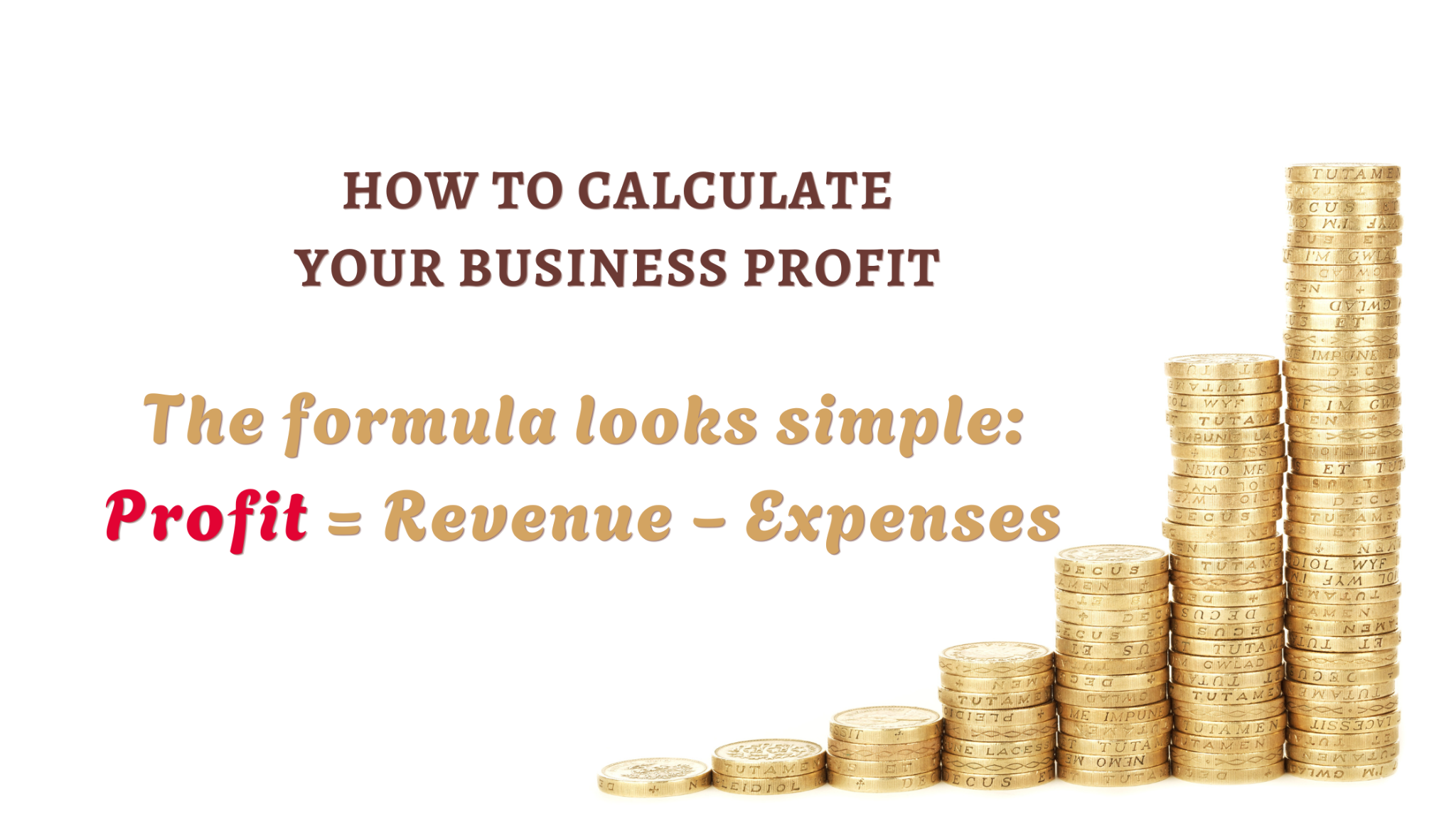
The formula looks simple: Profit = Revenue − Expenses

But despite how simple that formula appears, many entrepreneurs misunderstand what it means in practice.

Let’s imagine your business generates $20,000 in sales this month.

At first glance, you might feel like you’ve made $20,000. After all, that’s the amount that came into the business.

But then reality kicks in.

  • You paid suppliers.
  • You paid employees.
  • You spent money on marketing.
  • You paid for software subscriptions.
  • You covered transportation and operational expenses.

By the time everything is deducted, your numbers may look very different.

For example:

  • Inventory: $8,000
  • Salaries: $2,000
  • Marketing: $1,000
  • Transportation: $1,500
  • Software subscriptions: $500
  • Utilities and operations: $1,000

Total Expenses: $14,000

Actual Profit: $6,000

The business generated $20,000 in revenue but kept only $6,000.

And that difference is exactly why profit matters. Revenue tells you what came in, and Profit tells you what stayed.

In many ways, profit is the business world’s version of a report card. It reveals whether the business is truly creating value or simply moving money around.

This is one reason investors, accountants, lenders, and experienced entrepreneurs pay so much attention to profitability. Revenue may indicate that a company is attracting customers, but profit indicates whether the business model actually works.

As investor Warren Buffett has often demonstrated through his investments, great businesses are not necessarily the ones generating the most revenue. They are often the ones that consistently turn revenue into profit year after year.

The good news is that profit is not just a number you calculate. It’s also a skill you can improve.

Here are three profit-management skills every entrepreneur should learn.

1. Learn How to Control Costs Without Hurting Value

One of the fastest ways to improve your business’s profits is to learn how to manage costs wisely.

Notice I didn’t say “cut every expense.” Because many entrepreneurs hear the phrase “reduce costs” and immediately start removing things their business actually needs. They stop marketing, delay maintenance, reduce product quality, or underinvest in their team.

That often creates bigger problems later.

Instead, smart entrepreneurs focus on controlling unnecessary costs while protecting the things that create value for customers.

In his book Profit First, Mike Michalowicz explains that many businesses don’t have a sales problem; they have an expense problem. Money comes into the business, but poor spending habits prevent owners from seeing meaningful profits.

A simple question every entrepreneur should regularly ask is, “If I removed this expense tomorrow, would my customer notice?” If the answer is no, it may be worth reviewing.

What Is Revenue in Business? (A Simple Explanation for Entrepreneurs)

One of the first financial terms every entrepreneur should understand is revenue. If you ask a group of entrepreneurs how their business is doing, and one of the first numbers many will mention is revenue.

“We made $50,000 this month.” “Our sales doubled this year.” “We crossed six figures in revenue.”

One reason I’ve become fascinated by revenue is because of a TV show I enjoy watching called Shark Tank. The show features entrepreneurs pitching their businesses to a panel of investors known as the Sharks, hoping to secure funding and mentorship. 

If you’ve ever watched the show, you’ll notice that after founders passionately pitch their products or business ideas, the Sharks quickly shift their attention to the numbers. Questions like “What’s your revenue?”, “What are your profit margins?” “How much did you make last year?” or “What are your sales this month?” often determine whether the conversation moves forward or ends abruptly.

It doesn’t matter how innovative the product sounds; if a founder struggles to explain their numbers clearly, the investors immediately become cautious. That’s because revenue, profit, and other financial metrics help investors assess a business’s health and potential. 

Even in the real world, it’s no different. Investors closely track these numbers before investing in a company. Even as a business owner, you celebrate your revenue milestones as signs of progress, and you use revenue to measure growth and customer demand. Simply put, numbers tell a story, and in business, people pay attention to that story.

But despite how often business revenue is discussed, many people still misunderstand what revenue actually means and why it matters. And, understanding what revenue in business really means can help entrepreneurs make better decisions, avoid costly mistakes, and build healthier businesses over the long term.

So, what Is Revenue?

The Best Investments You Can Make in 2026 (That Work Almost Anywhere in the World)

When most people hear the word “investment,” they immediately think about stocks, crypto, real estate, or saving money in the bank. But the truth is, some of the best investments in 2026 are not always financial assets.

In today’s world, people are building life-changing opportunities from things many others overlook, such as skills, relationships, health, digital audiences, and even their reputation online. These are investments that can create opportunities almost anywhere in the world, whether you live in Nigeria, London, Nairobi, Toronto, or New York.

And honestly, this blog post addresses these types of investments in ways you might not expect. For instance, the internet has completely changed how wealth is created. A writer in any african country can work with clients abroad. A small creator can build a global audience from a smartphone. A teenager with a valuable skill can earn online without waiting for traditional opportunities. In many ways, the modern economy rewards people who invest in themselves just as much as those who invest money.

This is one reason books like Rich Dad Poor Dad by Robert Kiyosaki became so popular. The book challenged people to think differently about assets, ownership, and financial education. Investor Warren Buffett has also repeatedly said that investing in yourself is one of the best investments you can ever make.

The reality is simple: money matters, but some of the most valuable investments today are the ones that continue paying you long after the money is spent. So beyond stocks and real estate, what are the investments that truly matter in 2026?

1. Investing in Skills

Imagery from Canva 

This is probably one of the most underrated investments in the world today.

A useful skill can change your financial life faster than many traditional investments. The interesting thing is that skills travel. It doesn’t matter where you live, if you know how to solve valuable problems, people will pay for it.

Skills such as writing, design, video editing, programming, sales, digital marketing, communication, and copywriting are creating global opportunities. Many people are now earning remotely, freelancing, building businesses, or creating online brands simply because they invested time into learning something useful.

And unlike some investments that depend heavily on the economy, skills stay with you. Naval Ravikant, the entrepreneur and investor behind AngelList, once said: “Specific knowledge is one of the most valuable assets you can build.”

That idea is becoming more relevant every year.

A lot of modern wealth is now built around knowledge and problem-solving. Even platforms like YouTube, Coursera, LinkedIn Learning, and Udemy have made learning more accessible than ever before. In many cases, people are building careers from skills they learned online for free or at low cost.

And the sweet truth is that one valuable skill can open doors that degrees alone sometimes cannot. Even getting degrees means gaining consistent access to knowledge, which compounds into you becoming an expert in a field of interest. So, invest in adequate skills. 

What Being a Founder Actually Looks Like in 2026 (Beyond the Hype)

If social media were accurate, every startup founder would be raising millions and ‘building the future. But the reality of what being a founder looks like in 2026 appears very different, because when you step away from the headlines and talk to some of these business owners, the picture becomes much more complex. 

Where, for years, startup culture was dominated by motivational content that made entrepreneurship look like a straight line to success. But in recent years, more founders have begun to speak honestly about the challenges behind the scenes. Conversations about burnout, failed startups, layoffs, pivots, and financial pressure are becoming more open. 

Influential startup founders like Jason Fried, co-founder of Basecamp, and Paul Graham have consistently pointed out that the startup journey is far more difficult than it appears online. With their simple message, “building a company takes time, resilience, and a willingness to face uncertainty.”

And the truth is, funding doesn’t guarantee success. Startups like Convoy raised over $1 billion, while Quibi burned through nearly $1.75 billion and still shut down. It’s a reminder that behind the hype, building a startup is often messy, uncertain, and far from straightforward. 

20 Profitable Agric Business Ideas For Entrepreneurs In Africa

If you’re looking for profitable agric business ideas in Africa in 2026, you’re not alone. Across the continent, entrepreneurs are realising that agriculture is no longer just planting and selling, it’s a diverse ecosystem of opportunities, from urban hydroponics to tech-driven farm services. According to the African Development Bank, agribusiness accounts for over 15% of Africa’s GDP and employs more than 60% of the population, yet there remain significant gaps in supply, technology, and processing.

This blog explores 20 profitable agric business ideas in Africa in 2026 that are practical, high-demand, and backed by real market trends. Each idea is designed to show how you can earn sustainably, scale intelligently, and tap into industries that are actively paying and growing. From small backyard ventures to tech-enabled agribusiness, these opportunities prove that with the right strategy, agriculture can be both rewarding and innovative.

1. Poultry Farming (Broilers & Layers)

Poultry farming remains one of the most profitable agribusiness ideas in Africa in 2026 because demand for eggs and chicken meat is steady throughout the year. Across West, East, and Southern Africa, poultry products are everyday food staples for households, restaurants, hotels, and small food vendors.

Broiler production offers faster returns, with birds ready for market in as little as 6–8 weeks, while layer farming provides a more consistent income through daily egg production. This mix of quick cash flow and recurring revenue makes poultry farming one of the fastest-turning and most scalable agricultural businesses on the continent.

Beyond the data, this is also a business model I have seen work in real life. I personally rear broilers and noilers, and I watched my mother use poultry farming to support household income. Eggs were sold directly to small business owners, fertilised eggs were taken to hatcheries, day-old chicks were sold to other farmers, and some birds were raised for several weeks before being sold at higher prices.

These multiple income streams within a single poultry setup make it a practical and profitable agribusiness to venture into, especially for entrepreneurs seeking a business with proven demand and clear growth paths.

2. Aquaculture / Fish Farming

Fish is one of the most consumed protein sources across Africa, yet a large percentage of fish sold in markets is still imported. Wild fish stocks are under pressure, demand keeps rising, and this gap is exactly why aquaculture has become one of the most profitable agribusiness ideas in Africa in 2026.

In countries like Nigeria, Egypt, and Uganda, fish farming has moved beyond large commercial ponds. People are now rearing fish at different scales using:

  • Earthen ponds
  • Concrete tanks
  • Tarpaulin tanks
  • Plastic and fibre tanks for backyard farming

Catfish and tilapia are especially popular because they grow quickly, tolerate a range of water conditions, and sell easily in both urban and rural markets. In Nigeria alone, catfish farming has become a household-level business, with many families running small ponds within their compounds and supplying local restaurants, pepper soup joints, and market traders.

The real opportunity lies in the supply gap. Local production still does not meet demand, which means farmers with consistent output rarely struggle to sell. This makes aquaculture a practical, high-demand agricultural business with room for both small-scale start-ups and large-scale expansion.

3. Vegetable and Urban Farming

Vegetable farming remains one of the most practical and profitable agribusiness ideas in Africa in 2026 because it requires relatively low capital and generates income quickly. High-turnover crops such as peppers, tomatoes, spinach, cabbage, and leafy greens are consumed daily across African households.

In Nigeria and many parts of West Africa, it has become common to see households maintaining small vegetable gardens and herb plots. Many Africans prefer fresh food and natural remedies, relying on herbs for specific health needs and reducing dependence on constant drug use. This cultural preference keeps demand for fresh vegetables and herbs consistently high.

Beyond household farming, urban farming has opened a more profitable pathway. Techniques such as sack farming, container gardening, rooftop plots, and small-scale irrigation allow farmers to grow produce close to consumers. This reduces transportation costs, minimises spoilage, and increases profit margins.

Many urban farmers supply:

  • Local markets
  • Restaurants and food vendors
  • Supermarkets and neighbourhood stores

For entrepreneurs, vegetable and urban farming offer a flexible entry point into agriculture: start small, test the market, and scale steadily without heavy upfront investment.

Online Business Ideas That Actually Work in 2026: With Proofs

What separates online business ideas that work in 2026 from noise is not motivation, trends, or the fact that someone told you to try it. It’s proof. Proof of where money is actually flowing, where platforms are investing, and how real people are structuring income in ways that last.

As Seth Godin once said, “The best way to thrive is to make something people want, in a place they are already paying attention.” That idea matters more than ever now. The internet is crowded, attention is expensive, and not every online business idea deserves your time.

This blog post breaks down online business ideas that work in 2026, not based on hype, but on evidence. We look at why these models continue to grow, who they work for, and how people are turning them into profitable income streams and long-term careers, not just side hustles.

1. Service-Based Online Businesses (The Fastest to Start)

Service-based online businesses remain one of the most reliable ways to make money in 2026. Why? Because businesses would rather pay for solutions than experiment with them, another issue is that business costs are up, and hiring full-time staff is expensive, especially when they don’t need the service every time.

According to multiple global workforce reports, companies increasingly prefer, examples:

  • Social media management
  • SEO and content strategy
  • Email marketing
  • Website setup and optimisation
  • Ads management
  • Virtual assistance with specialised skills

These businesses work because they solve immediate problems, and you are not trying to convince them to buy something new. You are just offering help that they already need.

This is why service businesses consistently outperform product-only businesses online. You’re not waiting for traffic or hoping for sales. You are exchanging value for money directly. Platforms like Upwork, Fiverr Pro, Toptal, and LinkedIn Services continue to grow because businesses prefer paying for results over salaries.

2. Education-Based Online Businesses

One of the fastest-growing online business models in 2026 is education, and not the traditional kind. People are looking for ways to acquire more knowledge; they are searching online for practical knowledge that helps them move forward now.

  • Career transitions
  • Freelancing skills
  • Business knowledge
  • Technical skills
  • Personal development tied to income

Every day, millions of searches are being made around:

  • career transitions and remote work
  • freelancing and digital skills
  • business growth and income strategies
  • technical and product skills
  • personal development tied directly to earning more

This demand has created a massive opportunity for education-based online businesses. And the interesting part is that the most successful ones are not always built by professors or industry “gurus.” They are built by people who have done the work and can explain it clearly.

Education-based online businesses in 2026 include:

  • online courses and short programs
  • live workshops and cohort-based learning
  • one-on-one coaching or mentorship
  • digital guides, templates, and playbooks

What works here is experience, not perfection. People trust creators who are one or two steps ahead of them, not just those with impressive titles. Platforms like Gumroad, Kajabi, Teachable, and Notion have made it easier than ever for individuals to package their knowledge and sell it directly to their audience.

In fact, many creators openly share that their first profitable digital product didn’t come from years of teaching; it came from solving a problem for themselves and then showing others how to do it faster. That pattern keeps repeating because the market rewards clarity, speed, and relevance, not just information.

If you’ve learned something practical, something that saved you time, helped you earn more, or helped you avoid mistakes, education becomes a very real online business in 2026. You don’t need to know everything. You just need to teach what you already understand well enough to guide someone else.

3. Freelancing Built Around High-Income Skills

Freelancing in 2026 is no longer about offering “writing”, “design”, or “marketing” in general terms. Clients are not paying for titles anymore, they are paying for outcomes.

No one hires a freelancer simply because they are a writer. For instance, a client hires a UX writer to improve onboarding conversions, a content strategist to increase organic traffic, or an email copywriter to help sell more products. The clearer the outcome you sell, the easier it is for clients to say yes.

This shift is already backed by data. According to recent Upwork and Fiverr marketplace reports, freelancers who position themselves around specialised, high-income skills earn significantly more than generalists offering broad services. Other roles could be:

  • SEO content writing (traffic + revenue focused)
  • Conversion copywriting (sales-focused)
  • UX writing
  • Technical writing
  • Product design
  • No-code development 
  • Technical and SaaS documentation
  • Data analysis and automation.

What’s happening is simple: businesses want fewer freelancers, but better ones. Instead of hiring “a writer,” they are looking for someone who understands their product, their users, and their revenue goals. That is why freelancers who narrow their positioning, even if they do less overall work, are often earning more.

If you are freelancing in 2026 and still selling a generic service, you are competing on price. But when you build your freelance career around a specific, in-demand skill with clear business impact, you are competing on value, and value is what gets paid.

Page 1 of 18

Theme by Anders Norén & Customized by Karol K